Carpal Tunnel From Repetitive Strain
Carpal Tunnel Syndrome
By Brett Becker, MS, OTR/L, ACE-CPT, ACE-GFI
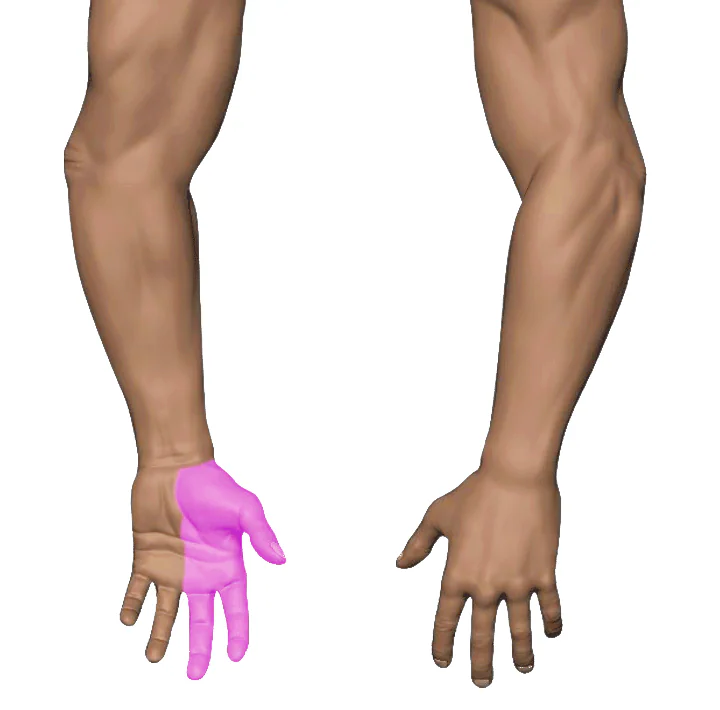
Table of Contents
Expert Opinion
- Carpal tunnel from repetitive hand use is one of the most universally known conditions of the hand/wrist, but also the most misinformed or misunderstood.
- Carpal Tunnel Syndrome is compression of the median nerve which innervates (supplies) specific muscles in the hand and fingers.
- Nerves are responsible for providing muscles with necessary strength, coordination, sensation, and ultimately function which is hugely important in typing, gaming, playing an instrument, drawing, and any other detailed hand work.
What Does This Diagnosis Mean
Carpal Tunnel Syndrome (CTS) is a condition that affects the median nerve in your wrist. The carpal tunnel is a narrow passageway in the wrist through which this nerve and several tendons travel from your forearm to your hand. The median nerve controls sensation and movement in the thumb and first three fingers of your hand.
"An analogy that can be used to think of nerves is like a water hose. When a water hose has a kink in the line there may be a little water sputtering out which can be like the tingling often first experienced with some prolonged bending at the wrist. With a large bend in the line this results in no water coming out, similar to when an individual sleeps with their wrist extremely bent and wakes up with a numb hand. Similarly this can also occur with pressure being placed on the nerve or hose. If someone comes along and steps on the hose then water may stop or sputter out just as if external pressure from a keyboard pad is being used. If there is no water coming from the hose to feed the plants then the plants will begin to die after months, similar to how our muscles can start to atrophy (die/weaken) if they are not getting proper innervation (supply) from the nerve."
Repetitive hand and wrist movements, especially those involving bending and flexing the wrist, can lead to irritation and inflammation within the carpal tunnel. This can compress the median nerve, resulting in symptoms like numbness, tingling, and pain in the thumb, index finger, middle finger, and half of the ring finger. So it is no surprise that it comes up so often with office workers, gamers, musicians, and others whose work or hobbies require a lot of repetition, but it seems to be much less frequent than believed. There are several reasons for this, but ultimately age is a major indicator: in younger people, thickening of the transverse carpal ligament has likely not developed. Instead, tendinopathies are much more commonly seen in gamers, and when anyone reports pain at the wrist, this should be considered first.
Typing, using a computer mouse, and performing tasks that involve gripping or vibrating tools for extended periods are common activities that can contribute to the development of carpal tunnel syndrome. Additionally, certain factors such as genetics, obesity, pregnancy, age, gender, and underlying health conditions can increase the risk of developing this condition.
The name "Carpal Tunnel Syndrome" is derived from the anatomical structure involved, where the median nerve passes through the carpal tunnel in the wrist.
Common Things You Might Feel
People with this condition are likely to begin experiencing tingling or numbness in the median nerve distribution. They may report feeling "slow" or weak when gripping a mouse, pen, phone, or controller. Finger dexterity is likely to be reduced, which is likely to decrease performance in typing, gaming, playing music, or drawing. People may also experience a burning sensation, but when pain is reported without numbness/tingling suspicion should then be placed on a tendon injury. Again, tendon injuries or tendinopathies are much more common in gaming and it is important to understand this as treatment differs.
Data suggest tendinopathies as being a far more prevalent condition than CTS (Hwu, 2021). When it occurs, CTS is brought on by a variety of factors, including a lack of rest breaks (Feng et al., 2021), overweight/obesity (Shiri et al., 2015), wrist angle, repetitive gripping, increased swelling of the hand/wrist, sleep positioning, anthropometric measures, use of vibrating tools, and cold temperature. Women are often known to be 3x more prone to developing CTS, but when strictly looking at the occupation of data entry there was no significant change, which may be the most practical comparison for typists, gamers, and other keyboard and mouse users (McDiarmid et al., 2000). Anyone who uses a mouse and keyboard for long hours, gamers included, should be aware of maintaining a neutral wrist or small wrist extension angle when using a mouse, setting rest breaks every 30 min, and monitoring their sleeping position so as to not have wrists excessively bent.
*Median Nerve: Supplies the thumb, index finger, middle finger, and the radial half of the ring finger on the palm (volar) side as well as the back (dorsal) side of the same fingers discussed, but only past the first joint in the fingers (distal to the proximal interphalangeal joint).
Disclaimer: The following information is provided for general educational purposes only and should not be considered medical advice. It is not intended to replace consultation with a qualified healthcare professional. If you have specific concerns or questions about your health or medical condition, please seek the guidance of a licensed physician or another qualified medical practitioner. Any reliance you place on the information provided is solely at your own risk. In no event will the author or 1HP be liable for any loss or damage arising from using this information. Always consult with a healthcare professional before starting or changing any medical treatment or regimen.
Quick Test
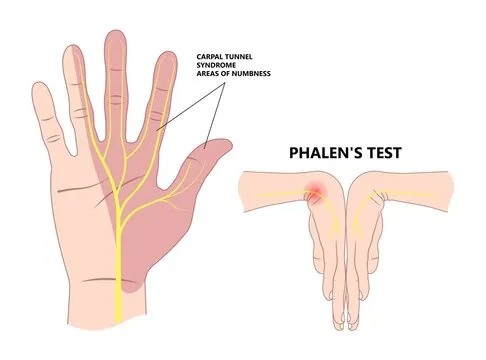
Perform this quick test* shown here to screen for this diagnosis. If there is numbness/tingling (paresthesia) experienced in the area highlighted then this may indicate you have this condition.
Instructions: Position the wrists in maximal flexion and hold for 60 seconds.
How Does It Happen?
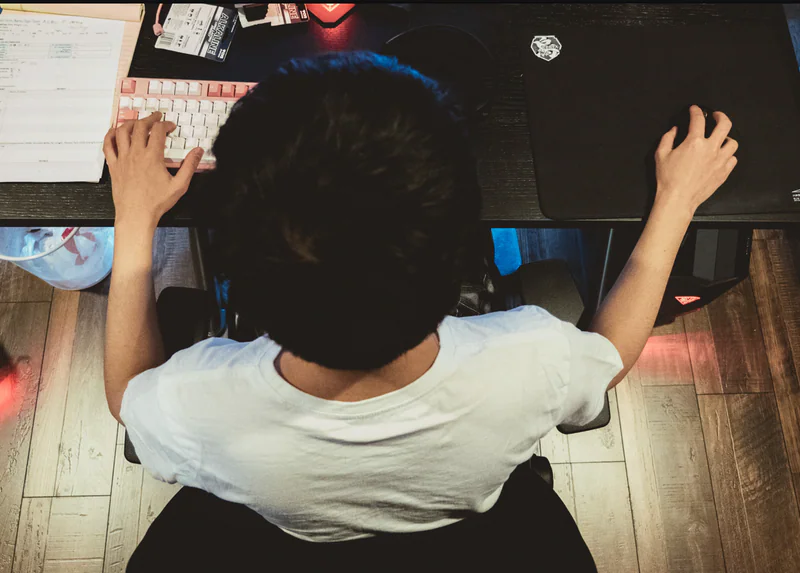
People who type, use a mouse or phone, game, play an instrument, or draw use their hands and fingers a lot! They are at risk for injury because of the long hours of use, but this does not always indicate carpal tunnel syndrome. Instead, pain is more often reported which tends to be a result of tendinopathies, NOT carpal tunnel syndrome which will present as numbness/tingling. People oftentimes take minimal rest breaks because they are so engaged and locked in, whether in a game, a deadline, or a practice session, and don't always think to put their body first. Pain and discomfort is something that can be reduced from distractions, and gaming or focused work is a good distractor, which makes it hard to know when to stop due to pain/discomfort. People are at risk however because of the positions they find themselves in and the excessive use required of the hands/fingers. PC gamers in particular are at an increased risk compared to mobile and console gamers because of the angle the wrist is positioned in, and the same keyboard and mouse setup is used for desk work. The position of the wrist is important as too much bending in either direction (flexion/extension) can result in increased pressure of the median nerve. Instead, the wrist should be positioned in neutral without an excessive angle up which can occur if the mouse/keyboard sits too low or you yourself are standing or sitting too high. This is why ergonomics/positioning can be extremely important for some. It is important however to recognize these symptoms early on and when they occur. For example, CTS symptoms may occur at night while sleeping for those who sleep with wrists bent which is a very common time irritation can occur as your body is unconsciously positioning the wrist poorly.

How to Fix It / Recover / What Can You Do?
Returning from this injury takes a concerted effort, but can be done without much time away from the game, the keyboard, or the instrument. Below are a few steps that people need to understand and take when discomfort in this area occurs.
- Identify the issue (One of the most important factors is early detection…do NOT push into or through the numbness/tingling discomfort)
- Rest the wrist
- Splinting: This may be one way for people to rest the irritated nerve. A wrist brace allows for the nerve to avoid compression from bending of the wrist in either direction. It is important to know that this should be used as minimally as possible, which is why it is most recommended to begin by wearing a wrist brace at night while sleeping. A frequent complaint is waking up in the middle of the night or early in the morning with numbness/tingling.
- Massage
- Prioritize massaging the bulky muscles in the palm of the hand (thenar/hypothenar region) as well as the forearm.
- Use heat/ice (Hot/cold packs, warm water soak)
- Heat can be helpful before or during activity. Ice can be helpful during an acute flare of symptoms.
- Tendon glides
- A good starting exercise to restore mobility between the tendons and the surrounding tissue by reducing adhesions and increasing blood flow.
- Nerve glides
- To restore mobility between the nerve and the surrounding tissue.
- Stretching
- Helpful in decreasing tightness and promoting elasticity in the transverse carpal ligament (carpal tunnel).
Diagnosis specific tip: Using a wrist pad may actually exacerbate carpal tunnel symptoms versus helping. Yes, there is benefit in having the wrist be in a neutral position, but there will now be pressure put on the median nerve from the resting position.
Surgery is rarely required in order to effectively treat, but can be extremely effective if indicated.
Science Behind The Injury
The diagnosis was explained in short above, but for those wanting to know and learn more this is for you.
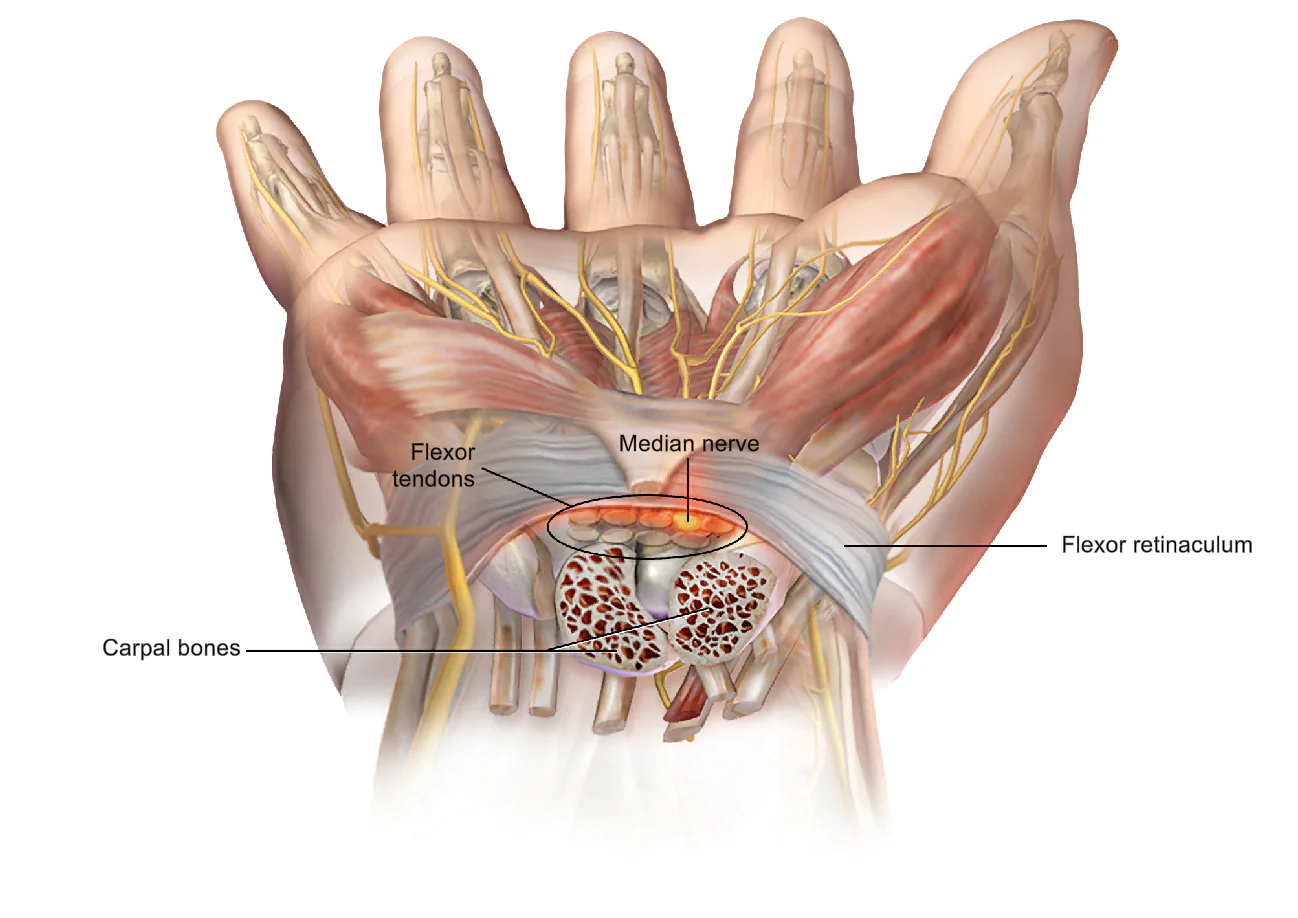
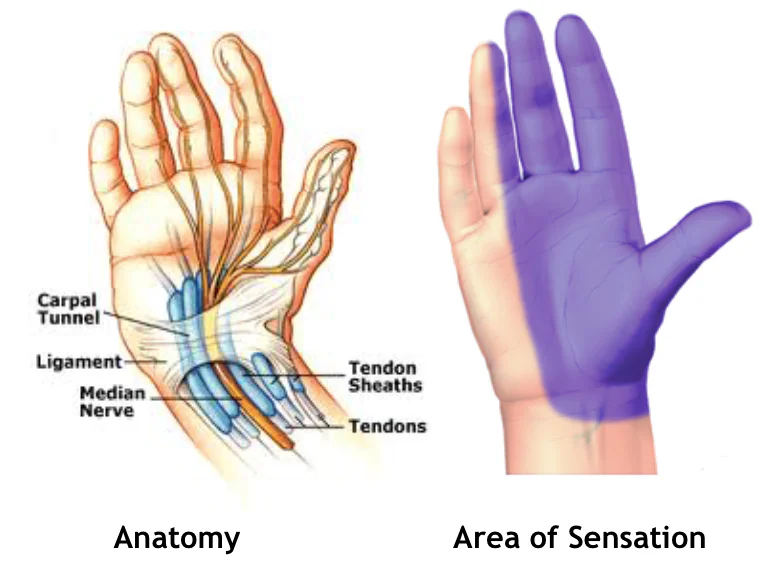
Specifically, this diagnosis is looking at one nerve, the median nerve and the surrounding tendons and ligaments. The median nerve is a mixed (sensory and motor) nerve which runs down from the brachial plexus. As it travels down the arm it continues between the flexor carpi radialis muscle tendon and palmaris longus tendon and then travels through the carpal tunnel. Once at the carpal tunnel, the median nerve along with 9 tendons run through this to the final destination in the hand. The carpal tunnel is formed by the carpal bones and the transverse carpal ligament (flexor retinaculum) which acts as the roof as it is a connective band that stretches between the carpal bones therefore creating space for the tendons and median nerve to pass through. The human anatomy of the wrist is already a crowded one. When we start to include increased fluid retention, thickening of the transverse carpal ligament, hormonal changes, tendon inflammation, previous injuries, external compressors, or even anatomical variation then problems can develop. With any of these factors, there will be decreased space within the carpal tunnel resulting in compression of the median nerve. As the nerve gets compressed, symptoms will present in the region shown below.
Nerve Responsible:
- Median Nerve: Supplies the thumb, index finger, middle finger, and the radial half of the ring finger on the palm (volar) side as well as the back (dorsal) side of the same fingers discussed, but only past the first joint in the fingers (distal to the proximal interphalangeal joint).
Tendons responsible:
- Flexor Digitorum Profundus (FDP) Tendons: There are four FDP tendons, one for each of the four fingers (index, middle, ring, and little fingers). These tendons originate in the forearm and pass through the carpal tunnel, attaching to the distal phalanges of the fingers. They are responsible for bending the last joint of each finger.
- Flexor Digitorum Superficialis (FDS) Tendons: There are also four FDS tendons, one for each of the four fingers. These tendons also originate in the forearm but split into two parts as they approach the fingers. They pass through the carpal tunnel and attach to the middle phalanges of the fingers. The FDS tendons are responsible for bending the middle joint of each finger.
- Flexor Pollicis Longus (FPL) Tendon: This tendon originates in the forearm and passes through the carpal tunnel to attach to the thumb's distal phalanx. It is responsible for bending the thumb's last joint.
Other involved structures:
- Transverse Carpal Ligament (flexor retinaculum): A thick ligamentous covering consisting of a tough band of tissue intended to maintain the shape and integrity of the carpal tunnel.
- Lumbricals: Intrinsic muscles of the hand which assist in bending (flexion) at the knuckles (metacarpophalangeal joints) and straightening (extending) the finger joints (interphalangeal joints). The muscle bellies can slide into the carpal tunnel when a strong fist is being made which can crowd the structures already passing through (i.e., the median nerve).
It should also be known that gaming, typing, and other repetitive hand use are not the only activities to bring on this condition and certainly other lifestyle factors play a role. School, work, hobbies, and sleep positioning can also further irritate this nerve and can be important to thoroughly evaluate as well.
Differential Diagnosis
- Anterior interosseous nerve syndrome: A condition which results in pain on the anterior side of the proximal forearm. This is a compression of the motor nerve which would result in weakness for pinching and gripping of a mouse, pen, or controller and reducing overall dexterity and performance. This is unlikely to be a common injury from gaming or desk work, but is still worth considering when discussing median nerve issues.
- Pronator Teres Syndrome: A median nerve compression occurring near the elbow that often gets overlooked or even misdiagnosed as CTS. The pronator teres muscle is located within the anterior forearm where it originates at the medial epicondyle and coronoid process of the ulna and inserts on the radius. This muscle pronates the forearm, rotating the palm downwards. Similar to CTS, pronator teres syndrome may come on from repetitive grasping, but it is common with repetitive pronation movements as well.
- Thoracic Outlet Syndrome: Another condition which should be assessed as the nerves discussed above all stem from the brachial plexus. The brachial plexus is a network of nerves that come off of the spinal cord and travel between the clavicle and the first rib down into the arm. The presentation can lead to confusion when interpreting pain or sensory disturbances throughout the arm, wrist, hand, and fingers as it may be a result of entrapment further up the chain near the neck as opposed to the median nerve.
Preventative Approach
There are several approaches to take in order to prevent injury from occurring. There are 3 main factors to first focus on and address, but it is also important to keep in mind other secondary factors which can be helpful to address.
- Exercising
- Strengthening: Important for building up a foundational base to allow the tendon/muscle to keep up with the workload they are being asked of in a preventative approach for tendinopathies.
- Tendon glides: Restore and maintain mobility between the tendons and the surrounding tissue by reducing adhesions and increasing blood flow.
- Nerve glides: Restore and maintain mobility between the nerve and the surrounding tissue.
- Intermittent stretching (during and after gaming, typing, or practice sessions)
- Proper warm-up (promotes blood flow to the muscles/tendons and lubricates stiff joints)
Additional:
- Ergonomics/positioning: Poor positioning could put the nerve in a compromised position causing excessive compression therefore making it more susceptible to injury.
- Sleep: Regarding CTS in young people, sleep is very important as the positioning one may find themselves in could be provoking symptoms. Sleeping with the wrist bent for long periods of time may result in compression of the median nerve. If this is the case a wrist brace may be indicated at night.
- Mental health: Stress/anxiety is a contributor toward CTS as people may excessively grip a mouse, pen, steering wheel, etc. much harder than necessary when they are under pressure. By making a strong fist the tendons running through the carpal tunnel can become inflamed, thus taking up necessary space for the nerve. Space can also be taken up by additional muscles in the hand (lumbricals) which will enter the carpal tunnel when a tight fist is made.
- Nutrition: Nutrition along with exercise is important for the prevention of several conditions. In regards to CTS there is evidence to show that being overweight/obese does increase the chance of developing CTS (Shiri et al., 2015).
- Rest breaks: Pain/discomfort levels can be reduced through distractions. Gaming, focused work, and practice are big distractors, meaning that people should take breaks every 45 to 60 minutes to assess how you are feeling. Creating a schedule that works for you and your activity is also recommended (e.g., for gamers, a 10-minute break after 2 ranked games (~60 minutes) or a short 5-minute stretch break after 1 ranked game (~30 min)). A general rule of thumb is, the longer you play or work, the longer the break should be to allow for some recovery.
- Massage: A great way to decrease muscle tightness and increase blood flow to the muscles, tendons, and nerves.
- Heat: Prior to gaming, work, or practice sessions or stretches to increase blood flow.
When to see a doctor first
See a doctor before starting if you have any of these:
- Constant numbness that doesn't change with activity
- Worsening weakness
- Visible muscle wasting
- Major swelling or color change
- A recent injury or fall
- Fever
- Severe, unrelenting pain
- Symptoms that wake you every night
Seek urgent care for emergencies.
Frequently asked questions
Why is carpal tunnel worse at night?
Many people sleep with their wrists curled, which raises the pressure inside the carpal tunnel. Fluid also shifts while you lie still. That is why waking up with numb or tingling fingers is a common sign. A brace that keeps the wrist straight at night often helps.
Does carpal tunnel go away on its own?
Mild symptoms sometimes ease with changes like a night splint, better wrist position and shorter bent-wrist sessions. Symptoms that are constant, or that come with weakness, usually need a medical exam. Long-lasting pressure on the nerve can lead to weakness that does not fully recover.
Do I need a nerve test for carpal tunnel?
A nerve conduction study measures how well signals travel along the median nerve. Doctors often use it when the diagnosis is unclear, symptoms are severe, or surgery is being considered. Many mild cases are diagnosed from symptoms and an exam alone.
When is carpal tunnel surgery needed?
Surgery is usually considered when numbness is constant, the thumb muscles are getting weak or thin, or careful non-surgical care has not helped. For the right person it can work very well. Most people with mild symptoms try splinting, activity changes and exercise first.
Can carpal tunnel affect both hands?
Yes, it often does. But numbness in both hands can also come from the neck or from health conditions such as diabetes or thyroid problems. If both hands are affected, see a doctor to check the cause before you assume it is carpal tunnel.
References
- American Academy of Orthopaedic Surgeons. Therapeutic exercise program for carpal tunnel syndrome.
- Baker NA, Moehling KK, Rubinstein EN, Wollstein R, Gustafson NP, Baratz M. The comparative effectiveness of combined lumbrical muscle splints and stretches on symptoms and function in carpal tunnel syndrome. Arch Phys Med Rehabil. 2012 Jan;93(1):1-10.
- Carlson H, Colbert A, Frydl J, Arnall E, Elliot M, Carlson N. Current options for nonsurgical management of carpal tunnel syndrome. Int J Clin Rheumtol. 2010 Feb;5(1):129-142.
- Elliott R, Burkett B. Massage therapy as an effective treatment for carpal tunnel syndrome. J Bodyw Mov Ther. 2013 Jul;17(3):332-8.
- Feng, B., Chen, K., Zhu, X. et al. Prevalence and risk factors of self-reported wrist and hand symptoms and clinically confirmed carpal tunnel syndrome among office workers in China: a cross-sectional study. BMC Public Health 21, 57 (2021).
- Kim SD. Efficacy of tendon and nerve gliding exercises for carpal tunnel syndrome: a systematic review of randomized controlled trials. J Phys Ther Sci. 2015 Aug;27(8):2645-8.
- McDiarmid, M., Oliver, M., Ruser, J., & Gucer, P. (2000). Male and female rate differences in carpal tunnel syndrome injuries: personal attributes or job tasks? Environmental research, 83(1), 23-32.
- Rempel DM, Keir PJ, Bach JM. Effect of wrist posture on carpal tunnel pressure while typing. J Orthop Res. 2008 Sep;26(9):1269-73.
- Shem K, Wong J, Dirlikov B. Effective self-stretching of carpal ligament for the treatment of carpal tunnel syndrome: A double-blinded randomized controlled study. J Hand Ther. 2020 Jul-Sep;33(3):272-280.
- Shiri, R., Pourmemari, M. H., Falah-Hassani, K., & Viikari-Juntura, E. (2015). The effect of excess body mass on the risk of carpal tunnel syndrome: a meta-analysis of 58 studies. Obesity reviews, 16(12), 1094-1104.
Related 1HP Articles
- Mouse Ergonomics for Gaming: Carpal Tunnel Mouse, Weight, Height, Shape & More
- Gaming Until You're Numb: 3 Simple Ways to Reduce Carpal Tunnel Symptoms
- Carpal Ligament Traction