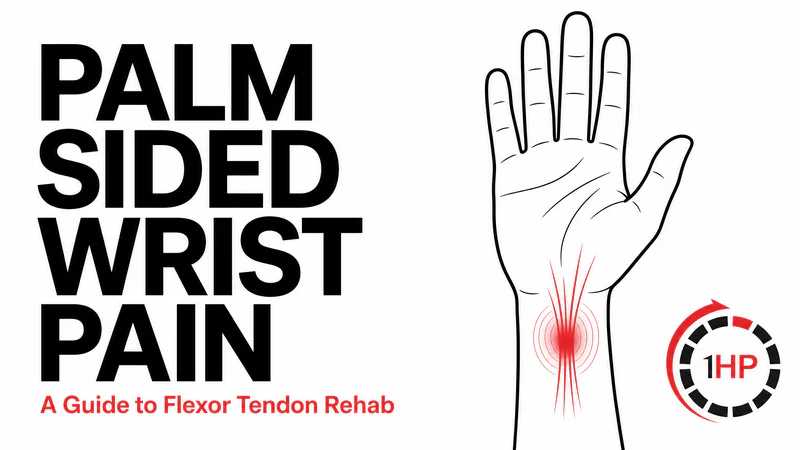
Palm Side Wrist Pain From Repetitive Strain
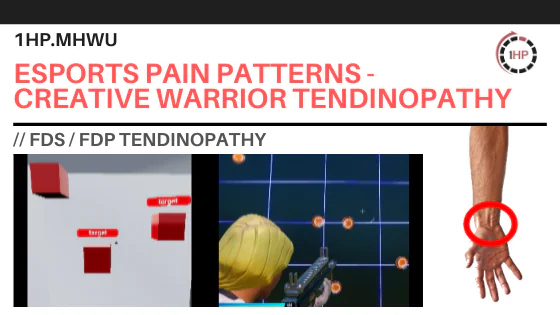
Creative Warrior Tendinopathy | Flexor Digitorum Superficialis/Profundus Tendinopathy
By Brett Becker, MS, OTR/L, ACE-CPT, ACE-GFI
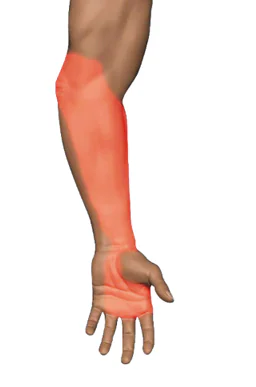
Table of Contents
Expert Opinion
- One of the most commonly reported pain patterns in gaming is palm-side wrist pain. Fast typing, mouse work and other quick finger work load the same area.
- One of the most commonly injured areas in gaming due to the stress and strain put on the finger flexors.
- Creative Warrior Tendinopathy is irritation of two tendons that cross the wrist and lead to the tips of the fingers.
- These muscles/tendons are responsible for gripping and clicking the mouse, hitting various keys on a keyboard, gripping a pen, or pressing keys or strings on an instrument.
What Does This Diagnosis Mean
Creative warrior tendinopathy is a condition that affects two muscles/tendons in your forearm, wrist, and fingers. Tendons are like little ropes that connect your muscles to your bones, and they help you move specific joints. When you play video games, type, or use your wrist and fingers a lot in other ways, these tendons can get irritated and swollen, causing pain. These tendons in particular allow each person to bend their fingers and click/push buttons.
This diagnosis is termed "Creative Warrior Tendinopathy" due to the frequent occurrence in Fortnite gamers; the name comes from gaming. In Fortnite, players are often switching between weapons or making/editing builds in a very rapid manner. This leads to extremely high APMs (Actions Per Minute) which can lead to overuse of the finger flexor muscles/tendons. Long stretches of fast, forceful typing, clicking or playing an instrument can overuse the same muscles/tendons. This name is also interchangeable with Flexor digitorum superficialis/flexor digitorum profundus (FDS/FDP) tendinopathy. This diagnosis is vastly different from carpal tunnel syndrome as carpal tunnel from gaming is much less common than many believe.
Common Things You Might Feel
You are likely to begin experiencing pain and discomfort during the activity (gaming, typing, mouse work) and a sore, achy, or stiff feeling after, in the area indicated above. Weakness is also likely to be present with gripping and moving the mouse. This is likely to decrease performance, in a game or at work. Pain will be worse with any gripping or pinching required throughout the day such as shaking up a protein shake, pulling a laptop/books out of a backpack, or gripping a dumbbell.
Disclaimer: The following information is provided for general educational purposes only and should not be considered medical advice. It is not intended to replace consultation with a qualified healthcare professional. If you have specific concerns or questions about your health or medical condition, please seek the guidance of a licensed physician or another qualified medical practitioner. Any reliance you place on the information provided is solely at your own risk. In no event will the author or 1HP be liable for any loss or damage arising from using this information. Always consult with a healthcare professional before starting or changing any medical treatment or regimen.
How Does It Happen?
Anyone who uses their fingers a lot is at risk. Long sessions and reduced rest breaks add up, whether you are gaming, typing, coding or playing an instrument. Computer gamers in particular are at an increased risk compared to mobile and console gamers due to the nature of the games and the speed/force they need to push/click buttons. Each time the mouse is clicked or a key is pressed, these muscles/tendons are being used. It is less about the number of clicks or keystrokes, but more about the force put into each one. The greater the speed and force, the greater the muscle stress and activation (Yoo, 2015).

How to Fix It / Recover / What Can You Do?
- Identify the issue (early detection…do NOT push into or through pain).
- Rest the wrist/fingers (a few days reducing workload, but continue moving the wrist, fingers, elbow).
- Splinting: Used minimally; rarely recommended as it is relatively restrictive, but if necessary look for a "resting hand splint."
- Massage in times of pain/discomfort.
- Use heat/ice (hot/cold packs, warm water soak). Be cautious using ice over nerves.
- Initiate isometric exercises: a good starting exercise to regain/maintain strength while limiting pain.
- Stretching: helpful throughout the range of motion.
- Isotonic strengthening: improve strength and endurance to decrease pain and prevent recurrence.
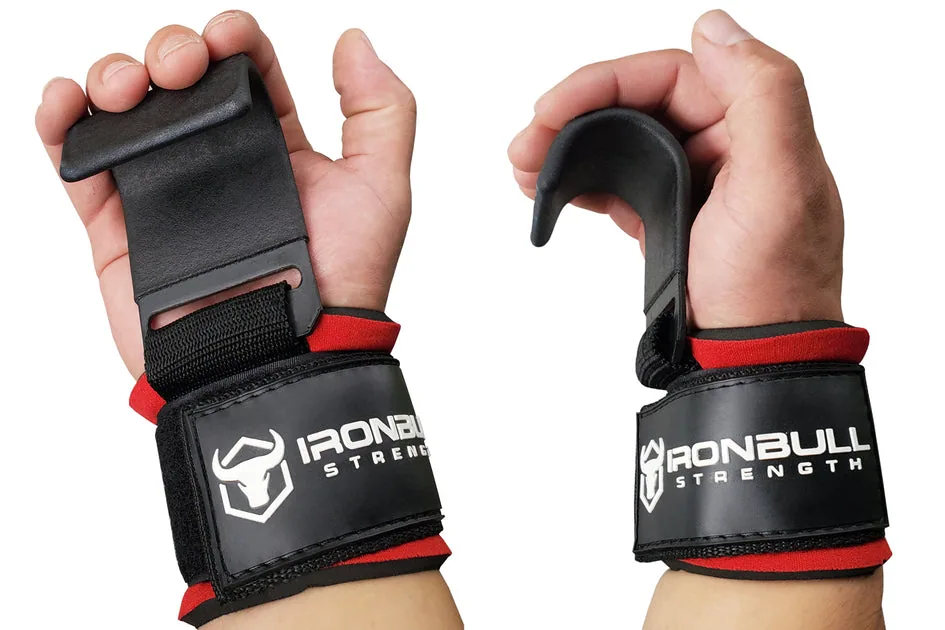
Additional tip: Consider using lifting hooks to decrease the muscle recruitment necessary for pulling or gripping movements while lifting (deadlifts, rows, bicep curls, lat pulldowns). Use only when pain is present (not an endorsement of IronBull Strength).
Surgery is very rarely required in order to effectively treat.
For a comprehensive guide on the exercises discussed, check out the videos on our Fix Wrist Pain page.
Science Behind The Injury
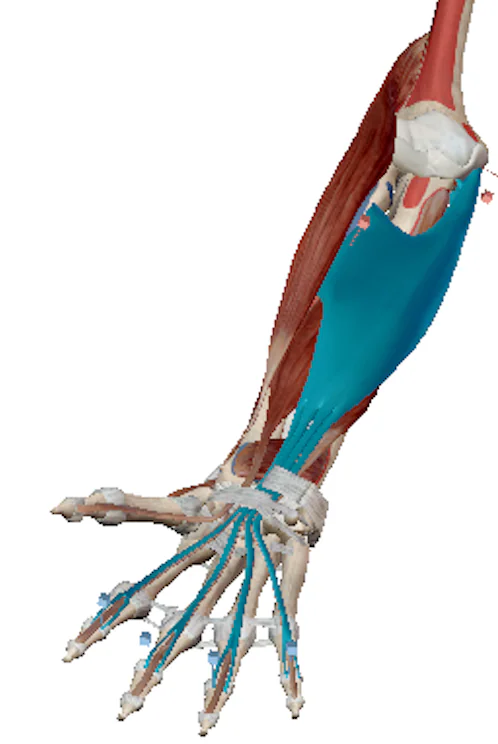
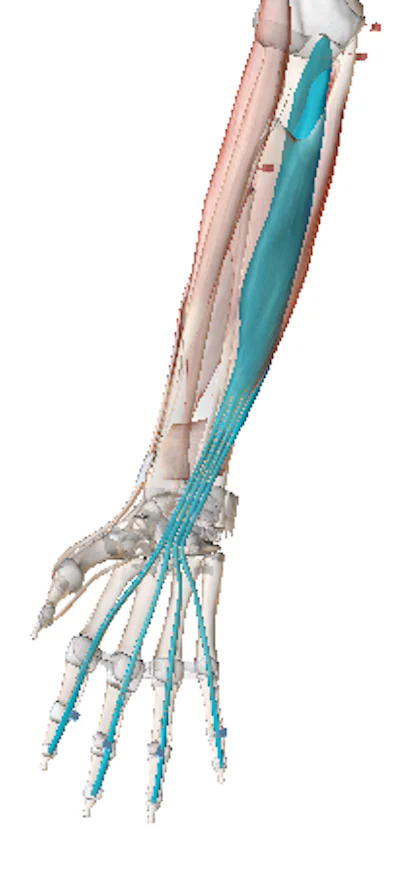
Specifically, this diagnosis is looking at two tendons (connecting muscle to bone) responsible for bending (flexing) the fingers. These tendons can feel irritated at various points such as the wrist crease as they run from near the elbow into the tips of the fingers.
Tendons responsible:
- Flexor Digitorum Superficialis: Primary flexor of the proximal interphalangeal (PIP) joints of the middle phalanges of all fingers aside from the thumb (digits 2 to 5) while assisting flexion of the metacarpophalangeal (MCP) joints. Originates at the medial epicondyle and shaft of the radius; attaches to the volar aspect of the middle phalanx of digits 2 to 5.
- Flexor Digitorum Profundus: The only flexor of the distal interphalangeal (DIP) joints of digits 2 to 5 while assisting flexion of MCP and PIP joints. Originates at the shaft of the ulna and interosseous membrane; attaches to the volar aspect of the distal phalanx of digits 2 to 5.
Both muscles also help with bending the wrist towards the palm (wrist flexion). This injury can also be common in climbers.
Differential Diagnosis
- Ganglion Cyst: A fluid-filled sac that grows from the lining of our joints; often needs to be removed (seek medical advice).
- Wrist Instability: Anatomical variations in bone length/alignment or injury can lead to increased strain on supporting structures (ligaments/tendons), resulting in pain and decreased performance.
Preventative Approach
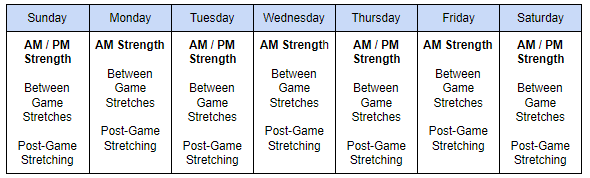
There are 3 main factors to first focus on, plus secondary factors.
- Strengthening exercises: Build a foundational base for the tendon/muscle.
- Intermittent stretching (during and after long sessions of gaming, work or practice).
- Proper warm-up: Promotes blood flow and lubricates stiff joints.
Additional: Ergonomics/positioning; rest breaks (every 45 to 60 minutes); massage; ice; heat; relative rest; Sleep/Nutrition/Mental health.
When to see a doctor first
See a doctor before starting if you have any of these:
- Constant numbness that doesn't change with activity
- Worsening weakness
- Visible muscle wasting
- Major swelling or color change
- A recent injury or fall
- Fever
- Severe, unrelenting pain
- Symptoms that wake you every night
Seek urgent care for emergencies.
Frequently asked questions
Why does the palm side of my wrist hurt when I click or type?
Clicking, typing and pressing buttons use the finger flexor tendons, which cross the palm side of the wrist. When clicks are fast and forceful for long periods, those tendons can get overloaded and sore. Force matters more than the number of clicks, so a lighter touch can help.
Can a lighter mouse or keyboard switch help wrist pain?
It can. Buttons and switches that need less force to press reduce the work for the finger flexors. A mouse that fits your hand also lets you hold it without squeezing. These changes lower strain, but strength work is what helps the tendons handle more.
Can weightlifting make palm side wrist pain worse?
Yes, heavy gripping can. Deadlifts, rows and pull-ups load the same finger flexor tendons you use for clicking. During a flare, lifting straps or hooks can reduce grip demand so you can keep training. Bring heavy grip work back slowly as the pain settles.
Is a lump on the palm side of my wrist a ganglion cyst?
It might be. A ganglion cyst is a fluid-filled lump that forms near a joint or tendon and can grow or shrink over time. Many are harmless, but any new or growing lump should be checked by a doctor to confirm what it is.
Is palm side wrist pain carpal tunnel?
Not usually. Carpal tunnel mainly causes numbness and tingling in the thumb, index and middle fingers, often at night. Aching pain on the palm side that gets worse with gripping or clicking, without numbness, points more to the finger flexor tendons.
References
- Yoo W. G. (2015). Effects of different computer typing speeds on acceleration and peak contact pressure of the fingertips during computer typing. Journal of physical therapy science, 27(1), 57-58.