Table of Contents
How Long Does RSI or Wrist Pain Recovery Actually Take?
By Dr. Matthew Hwu, PT, DPT, OCS, CSCS·
Quick answer
RSI and wrist pain recovery time varies widely. Most members see meaningful improvement within 6 to 12 weeks. Full recovery can take up to 18 months depending on the case. Results vary. Recent overuse often resolves faster than a problem that built up over years.
Where you land depends on how long you have had symptoms and how they have been managed. Longer cases can include setbacks partway through, which is normal and not a sign the plan failed. A structured program of exercise, pain education and a gradual return to load works better than passive rest.
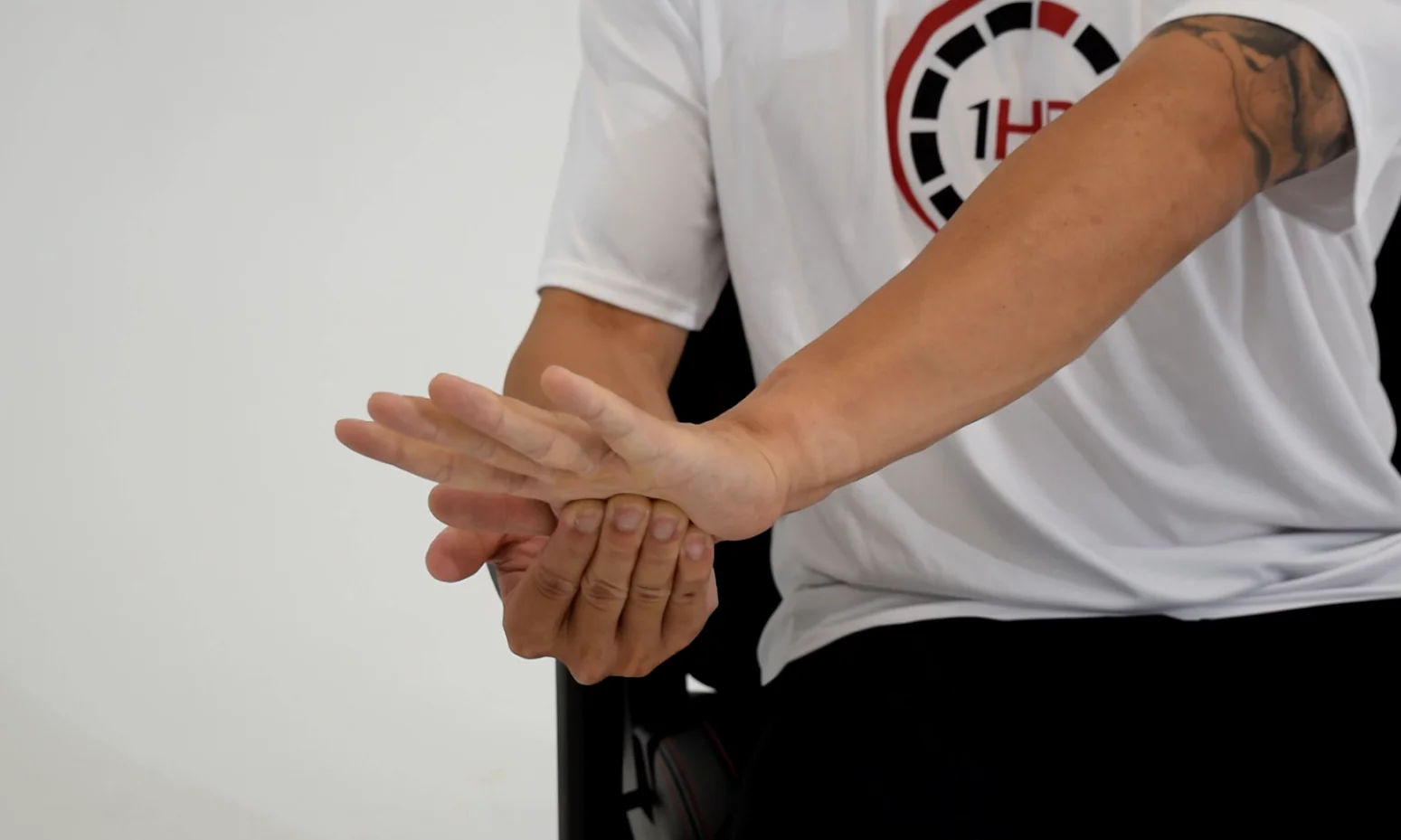
Real RSI recovery time varies more than most people expect. Most members see meaningful improvement within 6 to 12 weeks, and full recovery can take up to 18 months depending on the case. Results vary. Where you actually land depends heavily on how long you've had the problem and how it's been managed so far, which is easier to see through real cases than through a single number.
RSI Recovery Time: What the Data Actually Shows
72% of Power Leveling members who completed follow-up reached a meaningful improvement in arm, wrist and hand function, compared with 33% in the self-guided program
The median time to that improvement was 45 days, and 55% had reached it at their 4-week check-in
Average disability scores fell 46% (QuickDASH, from 34.4 to 18.0)
Most members see meaningful improvement within 6 to 12 weeks; full recovery can take up to 18 months depending on the case
These figures come from The 1HP Clinical Outcomes Report 2026, among members who completed follow-up. Results vary, and individual cases vary a lot, which is exactly where "average" stops being useful and real examples become more honest.
Case 1: The Fast Recovery (Acute Overuse, ~6 Weeks)
One of 1HP's published case studies involved a gamer who pushed a single weekend to 12 hours a day of aim training, well beyond his normal 3-4 hour routine, and ended up with pain in three separate areas of his hand and wrist. Testing showed his wrist extensors and flexors were operating at only 50% of normal endurance capacity: not a "torn" anything, just tissue that hadn't been conditioned for that workload.
His timeline: 40% improvement by week 3, full resolution of work-related discomfort by week 4, and near-100% recovery, including handling intensive 3-hour gaming sessions, by week 6.
This is close to the fastest realistic timeline. It's a clean case: a single clear overload event, no years of chronic buildup, and no other complicating factors.
Case 2: The Moderate Chronic Case (~8 Weeks)
Another case study followed a database administrator who'd been dealing with wrist and hand pain for 4 years, bad enough that typing for just 10 minutes pushed his pain to 6/10, across multiple prior treatment attempts that hadn't worked.
He'd made "great progress" by week 4, and by week 8 he was working full days pain-free and gaming 5 hours a night. Four years of a problem resolving in two months sounds fast, and it is, but it also took a real, structured program (exercise, pain education, and a gradual return to load), not passive rest.
Case 3: The Long, Non-Linear Case (~7 Months)
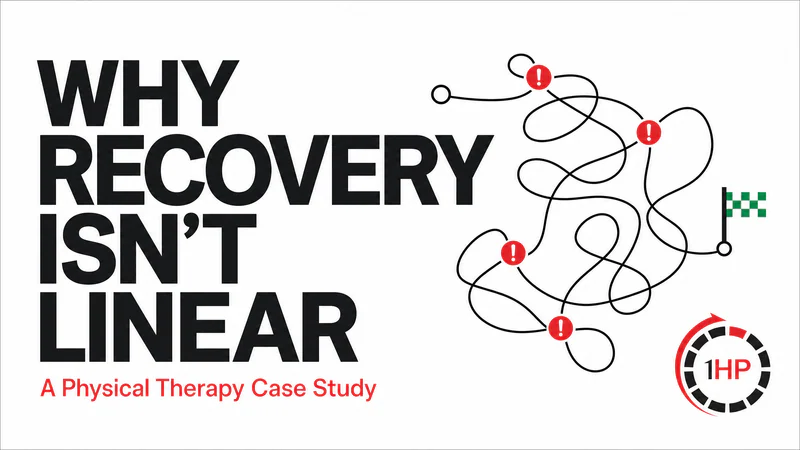
Not every case moves in a straight line, and 1HP has published a case study specifically about that. One client's RSI symptoms had progressed for two years before starting treatment, and full recovery took roughly seven months, with a genuine setback along the way: pain scores improved from a 41% disability rating to 18%, then regressed to 28% two months later, before eventually stabilizing at 0-2/10 with a full return to a 5-8 hour gaming tolerance.
That regression in the middle is the point. If your recovery follows this pattern, a bad week two months in doesn't mean the plan failed. It's a documented, normal part of how longer-standing cases actually resolve.
Why the Range Is So Wide
The honest floor, according to 1HP's own writing on recovery pacing, is that tissue needs "a minimum of six weeks" for meaningful cellular and physiological adaptation to happen, regardless of how motivated you are. That's Case 1's timeline almost exactly.
What stretches the range past that floor is mostly one thing: how long the problem existed before you started treating it properly. The 7-month case had two years of unaddressed symptoms behind it. The 8-week case had four years behind it, but a fully structured program from day one. Time-since-onset and treatment approach matter more than which specific diagnosis you have, that's the real driver of RSI recovery time, more than the label on your chart.
What "Progress" Actually Looks Like Early On
If you start an RSI recovery program and your pain briefly increases with the new exercises, that's not a red flag on its own. It's a documented, normal part of the process: deconditioned tissue reacting to being asked to do more, not new damage. Most people see that settle within days to a couple of weeks as the tissue adapts.
How 1HP Builds a Timeline for You
None of this is meant to replace an actual assessment. 1HP's clinicians are Doctors of Physical Therapy who build your specific plan around how long you've had the problem, what's already been tried, and your specific workload, not a generic printout. If you want a realistic RSI recovery time for your specific situation rather than someone else's case study, that starts with a free consultation, or 1HP's free wrist pain screen if you'd rather start with a self-guided plan first.
FAQ
What's the average RSI recovery time for wrist pain? Most members see meaningful improvement within 6 to 12 weeks, and full recovery can take up to 18 months depending on the case. Among Power Leveling members who completed follow-up, the median time to a meaningful improvement was 45 days. Results vary.
Can RSI really resolve in a few weeks? Yes, for acute, recently developed cases without years of chronic buildup. Real case studies show near-full recovery in as little as 4-6 weeks.
Is it normal for recovery to include setbacks? Yes. Longer-standing cases especially can show real regressions partway through treatment before stabilizing. That's a documented pattern, not a sign the plan isn't working.
Why did my pain get slightly worse when I started exercises? A short-term increase in pain when starting a new exercise program is a normal reaction from deconditioned tissue, not new damage, and it typically settles within days to a couple of weeks.