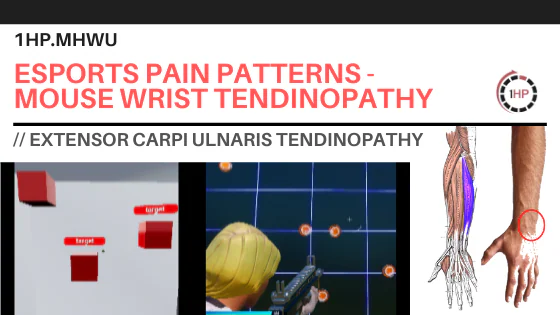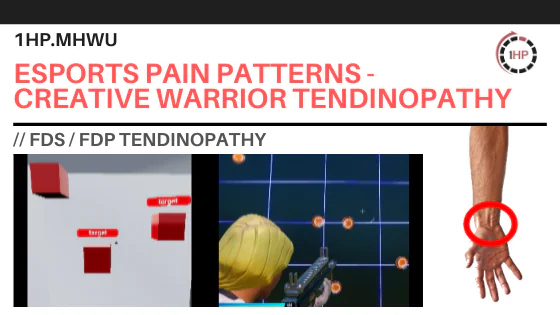
Pinky Side Wrist Pain From Repetitive Strain
Flick Wrist Syndrome | Extensor Carpi Ulnaris Tendinopathy | Mouse Wrist Tendinopathy | Snapping Wrist
By Brett Becker, MS, OTR/L, ACE-CPT, ACE-GFI
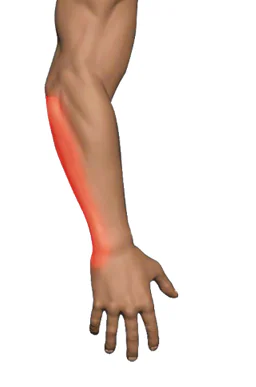
Table of Contents
Expert Opinion
- One of the most commonly injured areas in gaming due to the stress and strain put on this muscle for PC gamers. Mouse work outside games uses the same motion.
- Flick Wrist Syndrome is irritation of one tendon that crosses the wrist and allows for a key movement towards the small finger, used by PC gamers and anyone who moves a mouse with the wrist.
- This muscle/tendon is responsible for the flicking motion many PC gamers use when playing a variety of games, and for the same wrist motion in everyday mouse work.
What Does This Diagnosis Mean
Flick Wrist Syndrome is a condition that affects one muscle/tendon in your forearm and wrist. When you play video games, use a mouse or use your wrist a lot, this tendon can get irritated and swollen, causing pain. This tendon in particular allows someone to move their wrist towards the pinky side (ulnar deviation).
This diagnosis is termed "Flick Wrist Syndrome" due to the frequent occurrence in PC gamers playing FPS games such as Valorant or CS:GO who are required to flick their wrist during certain engagements to snap on to other players. The name comes from gaming, but the same motion happens whenever the wrist bends toward the pinky over and over, as in mouse work. This name is also interchangeable with Extensor carpi ulnaris tendinopathy, mouse wrist tendinopathy, and snapping wrist. This diagnosis is vastly different from carpal tunnel syndrome.

Common Things You Might Feel
You are likely to begin experiencing pain and discomfort during the activity (gaming, mouse work) and a sore, achy, or stiff feeling after. Weakness is likely to be present with lifting and moving the mouse as well as feeling "off" while aiming or making precise mouse moves. Some may report feeling a clicking/popping feeling on the pinky side of the wrist when turning the palm up (supination) which may indicate the tendon is subluxing. Pain may be worse with activities such as playing the piano, picking up cards or game pieces, or using a hammer/screwdriver to build a new desk.
Disclaimer: The following information is provided for general educational purposes only and should not be considered medical advice. It is not intended to replace consultation with a qualified healthcare professional. If you have specific concerns or questions about your health or medical condition, please seek the guidance of a licensed physician or another qualified medical practitioner. Any reliance you place on the information provided is solely at your own risk. In no event will the author or 1HP be liable for any loss or damage arising from using this information. Always consult with a healthcare professional before starting or changing any medical treatment or regimen.

How Does It Happen?
Anyone who moves a mouse with the wrist for long hours is at risk, and gamers playing on PC are at an increased risk because of the repetitive strain in wrist motion required. Each time the mouse is moved towards the pinky side using the wrist, this muscle/tendon is being used, in a game or in a spreadsheet. For PC gamers playing on a high DPI, the wrist will be where the majority of motion comes from, which in turn makes them more susceptible to this injury. The same goes for any mouse setup where the wrist, not the arm, does most of the moving. Additionally, players are playing at high rates of speed, which often does not allow for rest breaks mid game. Long stretches of desk work without breaks add load in the same way.

How to Fix It / Recover / What Can You Do?
- Identify the issue (early detection…do NOT push into or through pain).
- Rest the wrist/fingers (a few days reducing workload, but continue moving the wrist, fingers, elbow).
- Splinting: A standard wrist splint with the thumb free will restrict the irritated muscles/tendons. Others may benefit from a "Bullseye brace" or "Wrist Widget." For people who experience snapping or subluxation of the ECU tendon, a muenster splint may be indicated to limit forearm rotation.
- Massage in times of pain/discomfort.
- Use heat/ice (hot/cold packs, warm water soak). Be cautious using ice over nerves.
- Initiate isometric exercises: a good starting exercise to regain/maintain strength while limiting pain.
- Stretching: helpful throughout the range of motion.
- Isotonic strengthening: improve strength and endurance to decrease pain and prevent recurrence.
Diagnosis specific exercise tip: Use free weights and/or an EZ bar when performing bicep curls to limit the fixed palm-up (supination) motion or stress on the wrist.
Surgery is very rarely required in order to effectively treat.
For a comprehensive guide on the exercises discussed, check out the videos on our Fix Wrist Pain page.
Science Behind The Injury
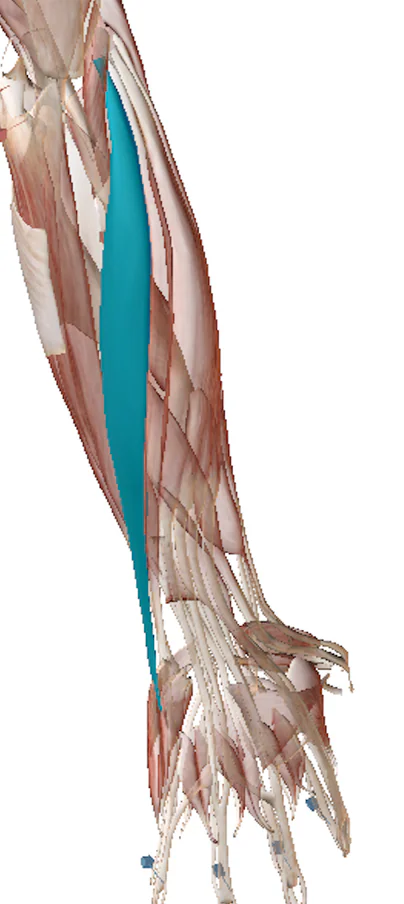
Specifically, this diagnosis is looking at one muscle which helps move the wrist and mouse towards the pinky side during gaming and mouse work. The pain will be noticeable at the wrist crease on the pinky side and may be exacerbated by frequent forearm rotation which makes the tendon more prone to becoming pinched between the two forearm bones as the subsheath becomes damaged.
Tendon responsible:
- Extensor Carpi Ulnaris (ECU): Responsible for wrist extension (lifting) and ulnar deviation (bending towards your pinky). Originates at the lateral epicondyle of the humerus and inserts on the back of the small finger (dorsal base of the fifth metacarpal).
Differential Diagnosis
- TFCC Tear: The triangular fibrocartilage complex (ligaments and cartilage on the pinky/ulnar side of the wrist) acts as a stabilizer. In young people this is most likely injured through trauma, but can develop from chronic degeneration and overuse.
- Ganglion Cyst: A fluid-filled sac that grows from the lining of our joints; often needs to be removed.
- Intersection Syndrome: Mimics Flick Wrist Syndrome; presents higher up on the back of the forearm roughly 4 to 6 cm from the wrist crease and more toward the thumb side.
Preventative Approach
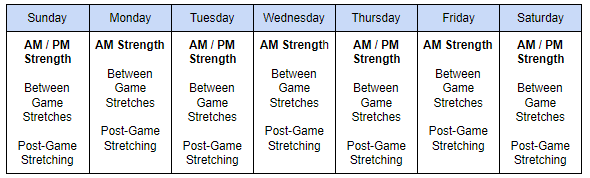
There are 3 main factors to first focus on, plus secondary factors.
- Strengthening exercises: Build a foundational base for the tendon/muscle.
- Intermittent stretching (during and after long sessions of gaming, work or practice).
- Proper warm-up: Promotes blood flow and lubricates stiff joints.
Additional: Ergonomics/positioning; rest breaks (every 45 to 60 minutes); massage; ice; heat; relative rest; Sleep/Nutrition/Mental health.
When to see a doctor first
See a doctor before starting if you have any of these:
- Constant numbness that doesn't change with activity
- Worsening weakness
- Visible muscle wasting
- Major swelling or color change
- A recent injury or fall
- Fever
- Severe, unrelenting pain
- Symptoms that wake you every night
Seek urgent care for emergencies.
Frequently asked questions
Why does my wrist click on the pinky side?
A click on the pinky side can come from the ECU tendon slipping out of its groove when you turn your palm up. It can also come from the TFCC, a cushion of cartilage and ligaments in that area. Clicking without pain is often harmless, but painful clicking, or clicking after a fall, should be checked.
Is pinky side wrist pain a TFCC tear?
It can be, but tendon strain is more common in people who make fast side to side wrist moves, such as flicking a mouse in games or at work. A TFCC tear is more likely after a fall or a twisting injury, and it may hurt when you grip, turn your forearm or push up from a chair. A doctor or physical therapist can test which tissue is involved.
Does mouse sensitivity affect wrist pain?
It can. With low sensitivity, you move the mouse farther, often using your elbow and shoulder. With high sensitivity, more of the movement comes from small, fast wrist flicks, which load the ECU tendon. A setting that shares the work between your arm and wrist may help.
Why does it hurt to turn my palm up?
Turning your palm up moves the ECU tendon in its groove on the pinky side of the wrist. When the tendon or its sheath is irritated, that turn can pinch or rub it. Curls with a straight bar and carrying trays or plates palm up are common triggers.
Can I keep using a mouse with pinky side wrist pain?
Often yes, with changes. Shorten sessions, add breaks, and try moving the mouse more with your arm than your wrist for a while. If pain stays mild and settles by the next day, you are likely within a safe range. Sharp pain, swelling or a weak grip means you should cut back further.
References
- Campbell, D., Campbell, R., O'Connor, P., & Hawkes, R. (2013). Sports-related extensor carpi ulnaris pathology: a review of functional anatomy, sports injury and management. British journal of sports medicine, 47(17), 1105-1111.
- McGee C and Ho K (2021) Tendinopathies in Video Gaming and Esports. Front. Sports Act. Living 3:689371.
- Yoo W. G. (2015). Effects of different computer typing speeds on acceleration and peak contact pressure of the fingertips during computer typing. Journal of physical therapy science, 27(1), 57-58.
- Zarro M, Goel R, Bickhart N, May CC, Abzug JM. Extensor Carpi Ulnaris Tendinopathy in Athletes: A Review of the Conservative and Rehabilitative Options. HAND. 2022.