


Evidence-informed guide for desk professionals

Wrist Pain From Typing: What It Can Mean and What to Do Next

Typing-related wrist pain is a symptom, not a diagnosis. This guide explains common patterns, practical first steps, and when it is time to get an individual evaluation.

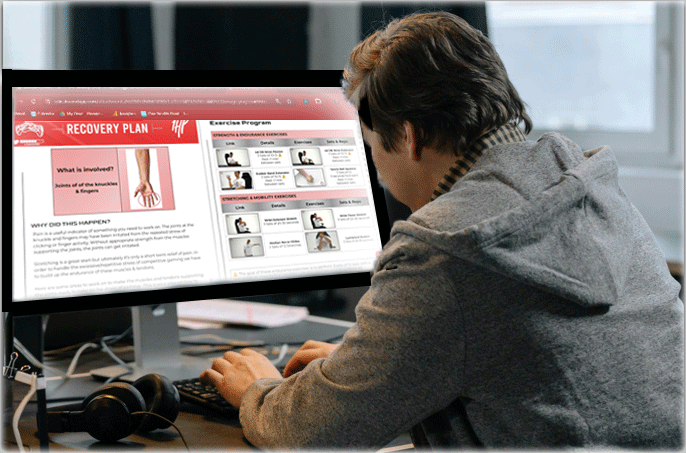
Desk professional using a structured 1HP wrist recovery plan at a computer
A desk professional using a structured 1HP wrist recovery plan.

Written and clinically reviewed by

Dr. Matthew Hwu

Dr. Matthew Hwu

PT, DPT, OCS, CSCS · Author

Dr. Elliot Smithson

Dr. Elliot Smithson

PT, DPT, MS, ATC, EMT-B · Reviewer

Last clinically reviewed October 13, 2026

The quick answer

Repetitive computer work can aggravate several tissues, including tendons and nerves, but the location of pain alone cannot tell you which structure is involved. A sensible starting point is to temporarily reduce the tasks that sharply increase symptoms, keep the hands and wrists in a comfortable range, vary your position, and take short breaks. Then rebuild work tolerance gradually rather than depending on one brace, stretch, or peripheral.

Persistent or worsening symptoms, especially numbness, weakness, loss of dexterity, or dropping objects, deserve a healthcare evaluation.[2][3]

Start with the pattern

Different symptoms can point in different directions

These patterns are educational examples, not self-diagnoses. More than one issue can exist at the same time.

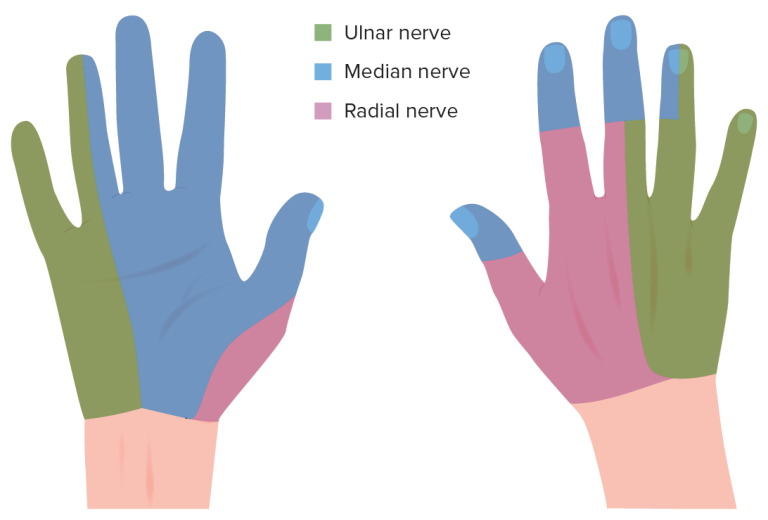
Illustration of median, ulnar, and radial nerve sensory regions across the palms and backs of the hands
Typical sensory territories of the median, ulnar, and radial nerves. Individual patterns can overlap or vary, so this illustration should not be used as a diagnosis.

Localized aching with repeated use

Pain that builds with clicking, typing, gripping, or sustained wrist positions can involve muscles or tendons. A clinician will also consider joints, ligaments, prior injury, and referred symptoms before deciding on treatment.
Thumb, index, and middle-finger tingling

Numbness, tingling, burning, night symptoms, weakness, or dropping objects in this distribution can fit median-nerve compression such as carpal tunnel syndrome.[3]

Ring- and little-finger symptoms

Tingling or numbness toward the little-finger side can involve the ulnar nerve, sometimes at the elbow rather than the wrist. That is one reason a complete arm and neck assessment can matter.

Pain after a fall or sudden event

Sudden pain, swelling, deformity, bruising, or loss of motion after trauma should not be treated as routine computer-related overuse. Seek an appropriate medical assessment.[2]

A practical sequence

What to do about wrist pain from typing

1

Check for symptoms that need prompt care

Do not push through a major injury, rapidly worsening symptoms, repeated numbness, clear weakness, loss of dexterity, significant swelling or discoloration, or an inability to move the hand or wrist.[2][3]

2

Adjust the dose of work

Identify which tasks, positions, or session lengths reliably increase symptoms. Shorten or divide those exposures temporarily, alternate tasks when possible, and increase the workload gradually as tolerance improves. The goal is an appropriate amount of activity, not a blanket rule to stop using your hands.

3

Fit the workstation to you

OSHA notes that there is no single correct workstation arrangement for everyone. Useful design goals include relaxed shoulders, supported elbows, enough room for the keyboard and mouse, and hands roughly in line with the forearms.[1] Workstation adjustments have reduced wrist and hand pain in at least one randomized office-worker trial, but equipment is only one part of care.[4]

4

Rebuild strength and endurance for the actual task

Exercise should match the diagnosis, current capacity, and response to loading. A 2024 office-worker study found that a wrist and hand exercise program improved grip measures but did not significantly change pain, underscoring that pain can have more than one contributor and that a generic routine is not a guaranteed fix.[5]

5

Track function, not only pain

Record practical measures such as comfortable typing duration, recovery after a work block, sleep disruption, numbness frequency, and ability to complete normal tasks. Trends are more useful than reacting to one unusually good or bad day.

A note about mice, keyboards, braces, and wrist rests

These tools change where and how your arm is loaded. That can be useful, neutral, or irritating depending on the person and symptom pattern. Try one change at a time, keep the rest of the setup stable, and judge it by comfort and work tolerance over several days, not by the word “ergonomic” on the package.

  • Keep frequently used devices close enough that you are not reaching.
  • Avoid holding the wrist at its end range for long periods.
  • Use support under the forearms when it helps the shoulders relax.
  • Change positions and tasks instead of searching for one perfect posture.
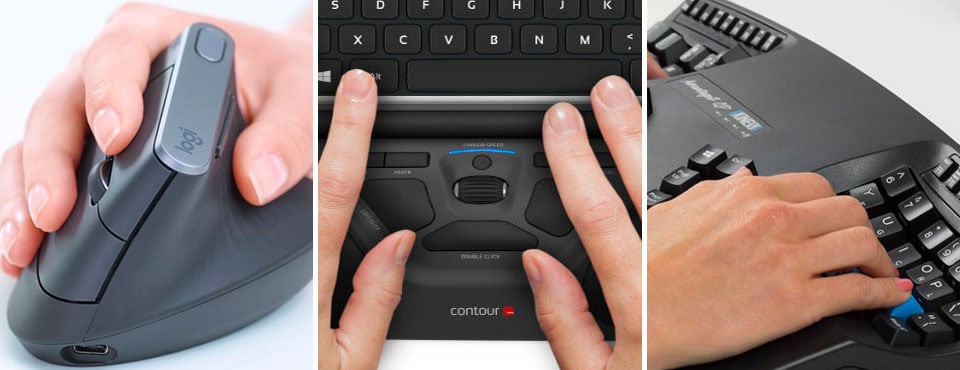
Examples of a vertical mouse, centered pointing device, and split ergonomic keyboard
Input devices change wrist and forearm demands, but no single design is best for every person.

When self-management is not enough

Get the pattern evaluated

Consider a physical therapist, occupational or hand therapist, primary-care clinician, or hand specialist when symptoms keep returning, limit work, interrupt sleep, or include neurological changes. The appropriate provider depends on the symptom pattern and urgency.

What a useful evaluation should clarify

  • Which tasks and positions reproduce or relieve symptoms
  • Whether the pattern is primarily tendon, nerve, joint, or another source
  • Whether testing or referral is needed
  • How much work is currently tolerable
  • What to change now and how to progress safely

About 1HP

Physical therapists focused on hands-dependent work

1HP is a team of Doctors of Physical Therapy specializing in wrist, hand, and forearm problems affecting desk professionals, gamers, musicians, artists, and other people who depend on their hands. Start with the free educational guide, then choose individual care if your symptoms need a more specific assessment.

Frequently asked questions

Is wrist pain from typing always carpal tunnel syndrome?

No. Wrist pain can come from tendons, nerves, joints, ligaments, or other conditions. Carpal tunnel syndrome more typically includes numbness, tingling, burning, or weakness affecting the thumb, index, middle, and thumb-side of the ring finger. A clinician can assess the full symptom pattern rather than relying on pain location alone.

Should I stop typing completely until the pain is gone?

Not necessarily. The right response depends on the cause and severity. Many people can temporarily reduce or divide symptom-provoking work, change positions, and stay within a tolerable level while gradually rebuilding capacity. Sudden injuries, progressive neurological symptoms, and severe pain need individual medical guidance.

Will a vertical mouse or ergonomic keyboard fix wrist pain?

A different device can change wrist and forearm demands, but no single peripheral fits every person or every pain pattern. Treat a new mouse or keyboard as one adjustable part of the workstation, not as a diagnosis or complete treatment plan.

When should I see a healthcare professional?

Arrange an evaluation when symptoms persist, worsen, interfere with work or sleep, or include repeated numbness, tingling, weakness, or dropping objects. Seek prompt care after a significant injury or if you cannot move the hand or wrist, notice major swelling or discoloration, or develop rapidly worsening weakness or loss of sensation.

Can physical therapy for typing-related wrist pain be provided online?

Many parts of care, including history-taking, movement assessment, education, activity planning, and guided exercise, can be delivered through telehealth. Whether online care is appropriate depends on your symptoms, location, and whether you need hands-on examination, imaging, or urgent medical care.

Sources

  1. 1. Computer Workstations eTool: Occupational Safety and Health Administration
  2. 2. Wrist Pain: Causes & Treatment Options: Cleveland Clinic
  3. 3. Carpal Tunnel Syndrome: American Academy of Orthopaedic Surgeons
  4. 4. Effect of an ergonomic intervention involving workstation adjustments on musculoskeletal pain in office workers: PubMed
  5. 5. Effectiveness of prevention exercises protocol among office workers with symptoms of carpal tunnel syndrome: PubMed

This page provides general education and is not a diagnosis or a substitute for care from a qualified healthcare professional who has evaluated you.

1HP

1 Health Point | Specialized wrist, hand, and forearm physical therapy.

© 2026 1 Health Point. All rights reserved. Privacy · Terms