Table of Contents
Why a Normal Wrist X-Ray Doesn't End the Search for Answers
By Dr. Elliot Smithson, PT, DPT, MS, ATC, EMT·
Quick answer
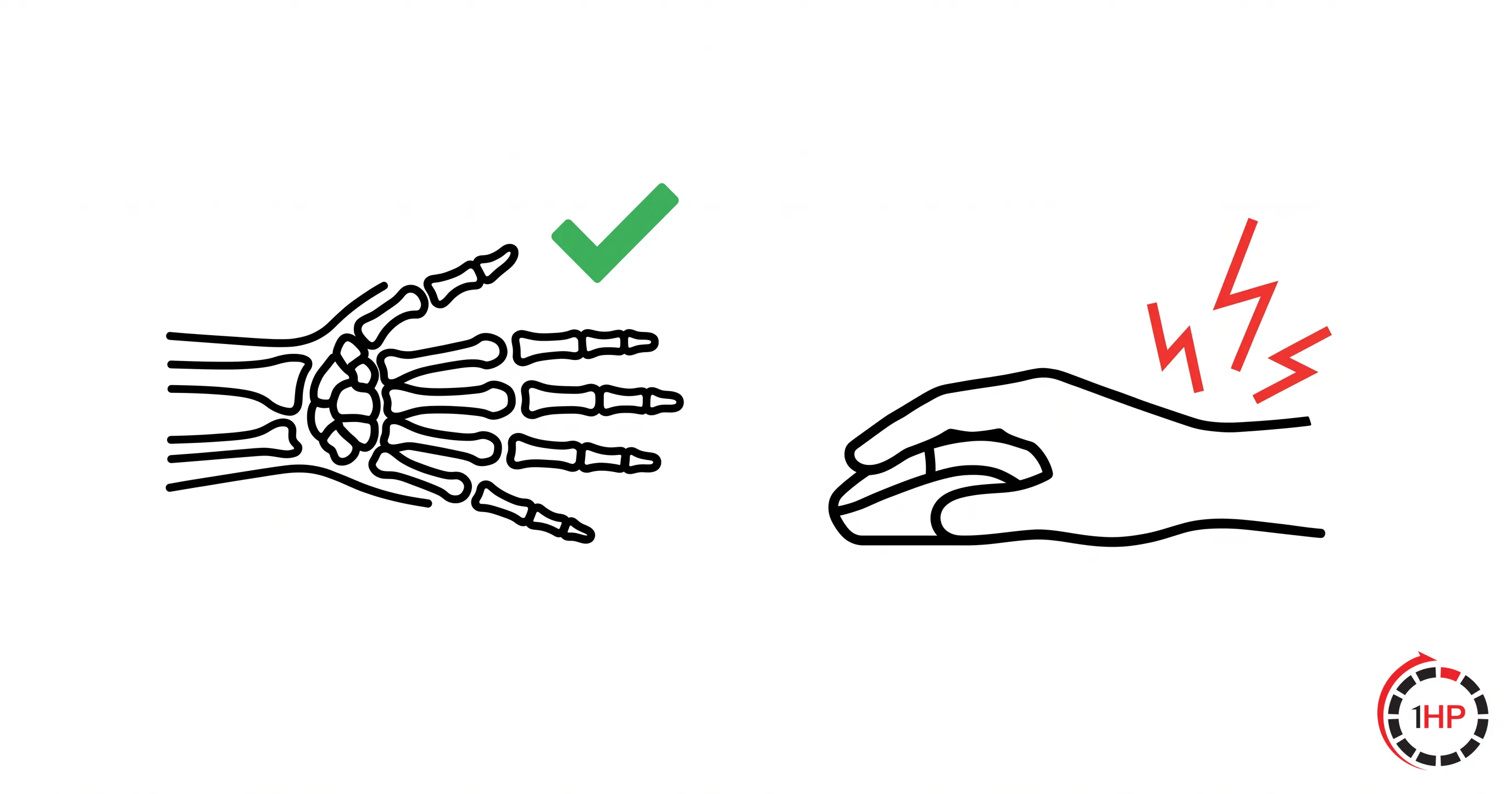
A normal wrist X-ray rules out obvious bone problems like fractures, but it cannot measure tendon endurance or explain why pain persists. After a fall, follow-up imaging may still matter.
Key stats at a glance (as of November 2026):
- The American College of Radiology (ACR) Appropriateness Criteria rate radiography "Usually Appropriate" as the first test for chronic wrist pain. When that X-ray is normal, MRI without contrast and MR arthrography are rated "Usually Appropriate" as the next study (ACR, Chronic Hand and Wrist Pain).
- An occult fracture is a break the first X-ray does not show. According to Geijer et al. at Skåne University Hospital (Emergency Radiology, 2025), meta-analyses put occult scaphoid fractures at 16% on average.
- In the Amsterdam Wrist Rules study of 893 adults at 5 Dutch hospitals, 68 (7.6%) had a scaphoid fracture, and the authors note that about 80% of people with a suspected fracture and normal X-rays do not have one.
- Hyland-McGuire et al. (Journal of Accident and Emergency Medicine, 1997) tracked 55 fractures missed on first X-rays. Finding them took 2 to 135 days.
- Among 229 program members (August 2025 to November 2026), The 1HP Wrist and Hand Pain Report 2026 found 25% answered yes to a red-flag question on the intake medical screening.
For pain that built slowly from typing, gaming or music, I would look past the bone. Endurance is how long your muscles and tendons can keep working before they complain, and no X-ray measures it. Check for warning signs first. Then find out how much load your hands can handle, and build endurance from there. Pain is a protection signal, not a damage report, so more rest rarely moves it.
Last updated . Guidance and figures reviewed as of November 2026 by Dr. Elliot Smithson, PT, DPT, MS, ATC, EMT.
A clean X-ray can leave the biggest question open. In a 2025 study from Skåne University Hospital in Lund, 124 people with a suspected hidden scaphoid fracture had already been put in a cast before a follow-up CT scan. After the scan, only 35 stayed in a cast, for a median of 14 days. For most of them, the first film had not settled what was going on.
A candid aside before going further. That study looked at falls and possible fractures, used records from 2006 to 2010, and came from a single hospital. It cannot tell anyone how a wrist that aches after months of typing is really doing.
Still, the wider research lines up in a clear pattern. A scaphoid fracture is a break in the small bone on the thumb side of the wrist, and it is the classic fracture a first film can miss. According to Hyland-McGuire et al. (Journal of Accident and Emergency Medicine, 1997), of 55 fractures missed on first X-rays, 41 showed up on a later plain X-ray, 6 on bone scan, 6 on CT and 2 on MRI. According to Mack et al. (European Radiology, 2003), MRI changed the diagnosis in 31 of 56 wrists, and plain films gave false positives in 25 patients. According to the 2020 Amsterdam Wrist Rules study, about 80% of people with a suspected scaphoid fracture and normal X-rays do not have one.
That second kind of wrist is who this article is mostly for. If your pain built slowly from work, gaming or music, I think the X-ray did its job well: it checked the bone, and the bone looked fine. What it never measured was endurance, meaning how long your muscles and tendons can keep working before they complain, or how your nervous system has learned to read pain, or how much load your hands absorb on an ordinary day.
Those gaps matter. A normal report can quietly turn into months of rest, which feels safe but rarely builds anything back.
Below, I walk through what a wrist X-ray actually checks, when a missed fracture is a real concern, what radiology guidelines say should come next, and what a fuller evaluation looks like. If a fall started your pain, go to the fracture section first, because timing there counts for more than it does anywhere else in this piece.
You did the sensible thing. Your wrist hurt, so you got an X-ray, and the report came back normal. Yet the ache still shows up halfway through the workday, and a quiet worry has crept in that maybe you imagined it.
You didn't. A useful question to bring to your next appointment is simple: what did the exam check besides the film? In a 2025 study from Sweden published in Emergency Radiology, follow-up CT scans for a suspected hidden scaphoid fracture after a clear first X-ray found one in only 21 of 178 examinations. For most of those wrists, the pain came from somewhere other than the bone everyone was hunting.
My colleague Dr. Matthew Hwu says it plainly in the 1HP video on resting after a normal scan: "Your pain is real and there's always a reason for it." Pain works as protection, not a damage report. When a clean scan leads to more and more rest, that cycle can slowly leave your tissues deconditioned and your confidence shakier than before.
Six sources, one pattern: what a first wrist X-ray can and cannot settle
Here is the research pulled into one view. Two quick terms first. Sensitivity is the share of real fractures a test catches, and specificity is the share of healthy wrists it correctly clears. A false positive means the film flags a problem that is not there.
| Source | Who was studied | What happened after the first X-ray |
|---|---|---|
| Hyland-McGuire et al., Journal of Accident and Emergency Medicine (1997) | 55 fractures missed on first X-rays | 41 found on a later X-ray, 6 on bone scan, 6 on CT and 2 on MRI; confirmation took 2 to 135 days |
| De Smet et al., American Journal of Roentgenology (1999) | 1,461 consecutive exams | Adding 1 oblique view changed 70 reads (4.8%); equivocal reads fell from 13.9% to 8.4% |
| Mack et al., European Radiology (2003) | 54 patients, 56 wrists | MRI changed the diagnosis in 31 of 56 wrists; plain films gave 25 false positives and 6 false negatives |
| Amsterdam Wrist Rules, 5 Dutch hospitals (2020) | 893 adults with acute wrist injury | 68 (7.6%) had a scaphoid fracture; the decision rule reached 97% sensitivity and 20% specificity |
| Geijer et al., Skåne University Hospital, Emergency Radiology (2025) | 178 CT exams after a clear first X-ray | 21 scaphoid fractures and 29 other fractures; of 157 wrists with no scaphoid fracture, 124 had been casted before CT and 35 stayed casted after |
| American College of Radiology (ACR), Chronic Hand and Wrist Pain criteria | Adults with chronic pain and normal X-rays | MRI without contrast and MR arthrography rated "Usually Appropriate" next; bone scan rated "Usually Not Appropriate" in all 6 variants |
Read side by side, these six sources point one way, and I think the lesson is bigger than any single study. A first X-ray is a strong bone screen with a blind spot for timing and soft tissue: it can miss a fresh scaphoid crack for days, and it can flag trouble that is not there. None of the six measured tendon endurance, because no film can. The bottom line: a normal X-ray answers "is the bone broken?" and leaves "why does it still hurt?" wide open.
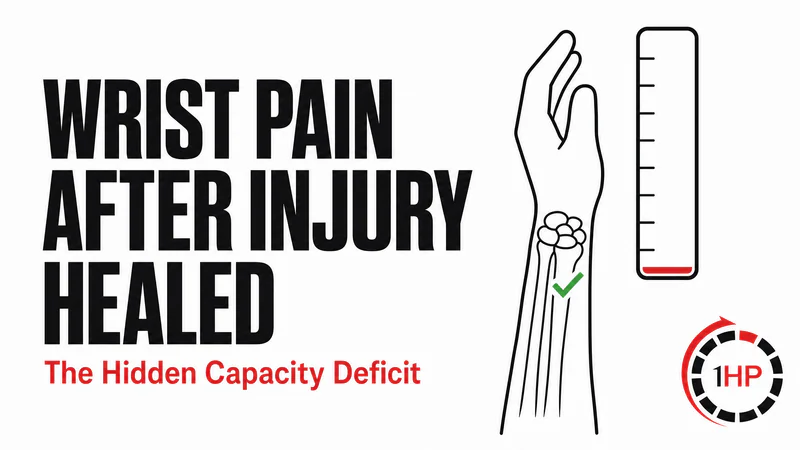
Think of the scan as checking whether your health bar is cracked. The research section below walks through what that check can and cannot settle.
What is the 1HP Load Reset Framework (LRF)?
Once the bone checks out, I work from a method we developed at 1HP called the 1HP Load Reset Framework (LRF). The Load Reset Framework is a 3-step plan for building tissue capacity once the bone has been cleared. It rests on one simple formula: Load > Endurance = Pain. The Load Reset Framework has three steps:
- Reset load. Trim your daily hand load to a level your tissues tolerate, while you keep working and gaming.
- Activate with isometrics. An isometric is a hold where the muscle works but the joint stays still, a gentle way to get irritated tendons working again.
- Build endurance. Progress the work step by step until your endurance meets or beats your load.
No X-ray can tell you where you sit on that formula, which is exactly why a normal film is the start of the search, not the end.
What does a normal wrist X-ray actually check for?
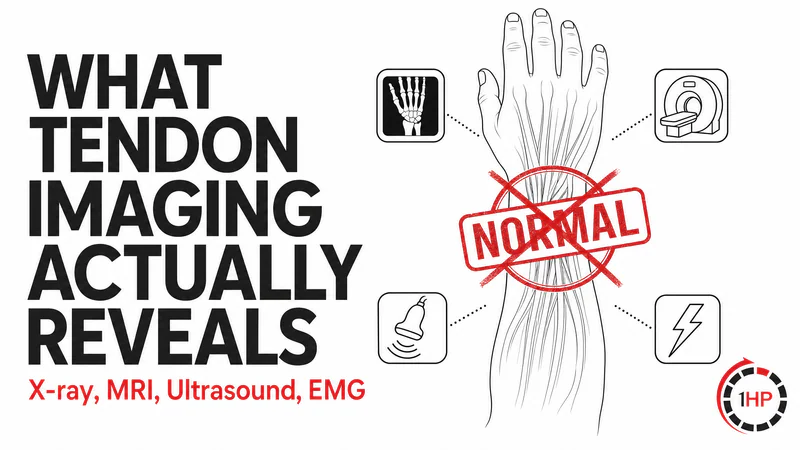
A wrist X-ray checks bone: fractures, joint alignment and arthritis. It cannot show tendon endurance, muscle capacity or how much repetitive load your hand tolerates before it hurts.
Before you treat the report as the final word, it can help to ask yourself a few plain questions:
- Was the X-ray ordered after a fall or impact, or for pain that built up slowly from typing, gaming or playing an instrument?
- Did the report talk only about bone, alignment and arthritis?
- Did anyone test how long your grip or forearm muscles can keep working before symptoms start?
- Did anyone ask what makes the pain better or worse across a normal workday?
If most answers are "no," the X-ray answered a narrow question. It did not answer yours.
The American College of Radiology (ACR) rates plain radiography as the only "Usually Appropriate" first test after acute hand or wrist trauma. Its separate criteria for chronic hand and wrist pain give radiography the same top rating as the starting study, while MRI, CT and bone scan are rated "Usually Not Appropriate" as a first step. That ranking is sensible. X-rays are built to catch the problems that change urgent decisions, like a broken bone or a joint sitting out of line.
Here is the part many people never hear. In the ACR chronic pain guidance, a normal wrist radiograph is a reason to look further, not a reason to stop: MRI without contrast or MR arthrography becomes the "Usually Appropriate" next study, and for suspected tendon problems, ultrasound and MRI both earn that rating. The research section below walks through what the ACR Appropriateness Criteria recommend next.
Think of it like checking a controller for a cracked shell. The shell can look perfect. That tells you nothing about a battery that drains halfway through every match.
The conventional wisdom says a clean scan means a healthy wrist. I think that gets it backwards. Julian's MRI, X-ray and EMG all came back normal, yet at intake he could not hold a mouse for five minutes. A clean scan rules out what a scan can see, and nothing more. Over the past 8 years, the 1HP team, including Dr. Matthew Hwu and me, has noticed a widespread belief that MRI, ultrasound and even nerve conduction tests deliver a "clear" diagnosis for repetitive strain in the wrist and hand. In our experience, that belief often comes from how imaging gets described during a rushed appointment, and it leaves people chasing better pictures instead of better answers.
Imaging centers sometimes lean into the same idea. A 2024 marketing page from Manhattan MRI, a New York City imaging provider, claims MRI's diagnostic value for wrist pain is "much more vast and promising" than X-ray's. Contrary to that pitch, a bigger scan is not the upgrade many people expect for overuse pain. The American College of Radiology does list MRI as a reasonable next study after a normal radiograph for chronic wrist pain, and that can help when a doctor suspects a ligament or tendon problem. But a sharper picture of structure is still a picture of structure, and it cannot time how long your tendons keep working.
A comparison of 4 sources shows the pattern clearly: every one of them is about what tissue looks like, and none measures how long that tissue can keep working. Endurance is something you test by doing, such as timing how long you can type before symptoms start. Scans are snapshots.
What each wrist test can and cannot tell you
I pulled the numbers from the ACR guidelines and five published studies into one table, so you can see side by side what each test is good at and where it goes quiet.
| Test | What it checks well | Key finding from the research | What it cannot measure |
|---|---|---|---|
| X-ray (radiography) | Fractures, joint alignment, arthritis | The only "Usually Appropriate" first test after acute trauma (ACR). Adding an oblique view changed 4.8% of readings across 1,461 exams (De Smet et al., AJR, 1999) | Tendon endurance, daily load tolerance |
| CT | Cortical (outer shell) fractures | Pooled sensitivity 93% and specificity 99% for scaphoid fracture, as cited by Geijer et al. (Emergency Radiology, 2025) | Bone marrow edema, tendon capacity |
| MRI | Ligaments, tendons, bone bruise | Changed the diagnosis in 31 of 56 wrists with normal or suspicious X-rays (Mack et al., European Radiology, 2003). A comparative study cited in the 2025 Geijer et al. paper found scaphoid abnormalities in 25% of people after a negative CT | How long tissue keeps working under load |
| Ultrasound | Tendons and tendon sheaths | "Usually Appropriate" for suspected tendon problems after a normal X-ray (ACR, Chronic Hand and Wrist Pain) | Endurance across a workday |
| Clinical exam (Amsterdam Wrist Rules, 2020) | Snuffbox swelling and tenderness, painful ulnar deviation, thumb compression | In a 2020 study of 893 adults at 5 Dutch hospitals, the rule showed 97% sensitivity and 20% specificity, and the authors estimated it could cut unnecessary immobilization and imaging by 15% | Long-term load tolerance |
| Capacity screening (1HP Wrist Pain Troubleshooter) | History, function, pain regions, nerve symptoms, mobility, an endurance test matched to the muscles involved | Rerun whenever your situation changes, so it tracks capacity over time | Bone injury (that is the X-ray's job) |
Read across the rows and one pattern stands out: 5 of the 6 tests describe structure at a single moment, and only a capacity test measures load over time. In my view, that is the missing piece in most wrist workups, and it is the piece that matters most for pain that built slowly from typing, gaming or music.
That gap is why 1HP and I lean on an evidence-based approach to wrist pain recovery that tests capacity directly instead of waiting for a scan to reveal it. If your pain grew out of months of keyboard and mouse work rather than one bad fall, bone was never the most likely suspect, and the next question becomes what was actually being overloaded.
Can a normal wrist X-ray miss a fracture after a fall?
Yes. After a fall on an outstretched hand, some scaphoid fractures stay hidden on the first X-ray, so a repeat film, CT or MRI is standard when suspicion stays high.
The scaphoid is a small bone on the thumb side of the wrist, and it is the most commonly injured carpal bone. A 2025 study from Skåne University Hospital in Lund noted that meta-analyses put the average share of scaphoid fractures invisible on the first X-ray at 16%. The same team reviewed 157 follow-up CT scans that showed no scaphoid fracture. Those scans still found 29 other wrist or carpal bone fractures, and across at least three years of follow-up, no missed scaphoid fracture turned up.
That second finding matters. Notably, it suggests a careful follow-up scan is as much about clearing wrists as catching breaks. A good follow-up scan does two jobs. It catches the break, and it confidently clears the wrist that is not broken.
The cost of skipping follow-up is time. Older research on fractures missed on initial films looked at 55 people whose first X-rays were negative but who later proved to have a fracture. Recognition took anywhere from 2 to 135 days, follow-up had not been arranged at the first visit in 17 of them, and all but 9 needed their treatment changed once the fracture was found. In a separate group of 56 wrists with normal or suspicious radiographs, MRI changed the diagnosis in 31. This suggests the real danger is not the first film but the missing plan after it. Importantly, I believe that is the most fixable part of the whole story.
One UK law firm describes a case on its own site where a 21-year-old's football fall was labelled a sprain. By the firm's account, an MRI confirmed a scaphoid fracture nearly nine months later, and by then it needed bone-graft surgery. It is the firm's telling of its own case. Still, it shows how "just a sprain" can stick. Tellingly, the problem there was arguably not the X-ray at all, but how long the label went unquestioned.
Now the other side of the coin. A 2020 study of 893 adults with acute wrist injuries across five Dutch emergency departments found scaphoid fractures in 68 of them (7.6%). In 2020, the authors cited literature showing that, on average, 80% of people with a suspected scaphoid fracture and normal X-rays do not actually have one. Their exam rule used five findings to decide who needs imaging and a splint:
- Sex
- Swelling in the anatomical snuffbox, the small hollow at the base of the thumb
- Tenderness in that same snuffbox
- Pain when the wrist bends toward the pinky side
- Pain when the thumb is pushed straight down toward the wrist
Most wrists with a clean film after a fall are not broken. The implication, in my view, is surprisingly hopeful: these numbers indicate that a calm, scheduled second look is usually enough, and panic is rarely warranted. If your pain started with a fall, ask before you leave who will check the wrist again, and when. The research section below walks through what the guidelines say about that second look.
Most people reading this never fell at all, though. Their pain crept in over months at a keyboard, mouse or instrument. If your thumb-side ache built up slowly with no injury, the guide to palm side thumb pain from repetitive strain fits your situation far better than another fracture hunt, because for you the X-ray's blind spot sits somewhere else entirely.
What do radiology guidelines say should happen after a normal wrist X-ray?
Radiologists have written down what should follow a normal wrist X-ray. We read their guidance and found two separate paths, plus one question neither path is built to answer.
One UK case shows what is at stake on the first path. A 21-year-old football player fell forward during a tackle and landed on his outstretched arm. At a hospital urgent care center he was told he had a sprain and sent home. According to the law firm that later brought his claim, he "assumed this was simply the healing process of the damaged tissues." An MRI confirmed a scaphoid fracture nearly nine months after the injury. By then the bone had not healed, and fixing it took a bone graft from his pelvis and a screw. The NHS Litigation Authority admitted negligence.
The firm is careful about where the failure lay. A scaphoid fracture "cannot necessarily be confirmed by examination or X-ray on the date of injury," it writes. The standard is to immobilize a suspected fracture and reassess it within 10 to 14 days. What was missing was the second look. One case cannot show a pattern, but a 1997 emergency department study, cited in the American College of Radiology's evidence on acute wrist and hand trauma, points the same way. It looked at 55 people whose first X-rays were negative and who later proved to have fractures. In 17 instances no follow-up had been arranged at the first visit, and confirmation took anywhere from 2 to 135 days.
The American College of Radiology (ACR) convenes expert panels that rate which scan suits which clinical situation, and its trauma guidance makes the second look explicit. If an acute injury is suspected and the first films are "negative or equivocal," three next steps are rated "Usually Appropriate," with none preferred. Ultrasound and bone scans are rated "Usually Not Appropriate." The safety net exists to catch a minority: Dutch emergency researchers note that most people splinted after normal films have no fracture, which they call "substantial overtreatment." Follow-up after a fall is routine because a miss can be costly, and most people who get it turn out fine.
Many people asking this question did not fall last week. Their wrist has hurt for months. For them the ACR has separate ratings for chronic hand and wrist pain, and the path depends on what the doctor suspects.
| Your situation after a normal X-ray | Next study the ACR rates "Usually Appropriate" |
|---|---|
| Suspected acute injury, first films negative or equivocal | Repeat X-ray in 10 to 14 days, MRI without contrast, or CT without contrast |
| Chronic wrist pain, X-rays normal or showing nonspecific arthritis | MRI without contrast or MR arthrography |
| Chronic pain with a suspected tendon injury, tenosynovitis or other tendon problem | Ultrasound or MRI without contrast |
| Chronic pain with symptoms suggesting carpal tunnel syndrome | None. Ultrasound and MRI are rated only "May Be Appropriate" |
For long-standing wrist pain, then, a normal X-ray usually leads to an MRI. For suspected carpal tunnel syndrome, no scan clears the panel's top rating, so imaging plays a smaller part in sorting it out.
Every option in the table answers a question about structure: a hidden crack, a damaged ligament, an irritated tendon. None tells you how long you can type, use a mouse or play before the pain starts. Our own records show many people end up without an answer. These figures come from The 1HP Wrist and Hand Pain Report 2026, which we published this month:
What people bring to us that no scan records
- 46% of 1,023 people who applied for our coaching program (November 2025 to September 2026) said they could not get a clear diagnosis or explanation of what was going on.
- 65% of 229 program members (August 2025 to November 2026) had been in pain for more than a year before joining.
- 48.4 minutes was the median time those program members could stay active before symptoms started, among the 161 who answered.
All of these people sought us out, so the figures describe our applicants and members and cannot show how many people with a normal X-ray are left without an explanation. We also have a stake: our coaching programs are built around measuring and building that tolerance.
Read side by side, the two sets of ACR ratings and our records show what a normal X-ray actually does: it narrows the search. After a fall, the next move is a planned second look, and most people pass it. For long-standing pain, the next moves are scans aimed at specific tissues. Neither path tests how much work your wrist can handle today, and imaging was never designed to measure that.
- After a fall, ask before you leave whether a repeat X-ray in 10 to 14 days, an MRI or a CT has been arranged, and who will contact you about it.
- If the pain is long-standing, ask your doctor which tissue they suspect: joint, ligament, tendon or nerve. The ACR's recommended next scan changes with the answer.
- If carpal tunnel syndrome is the working label, ask what a scan would change about the plan, since the ACR rates none as "Usually Appropriate" in that scenario.
- Time how long you can type, use a mouse or game before symptoms start on a few ordinary days, and write it down. No test on either list gives you that number.
How we checked this
We read two sets of ACR Appropriateness Criteria, one for acute wrist and hand trauma and one for chronic hand and wrist pain, along with the evidence table behind the trauma criteria. We also read a 2020 Dutch multicenter emergency department study and a 2025 UK law firm case study. The ACR ratings reflect expert panel judgment, and the pages we read show no publication date. The 1997 study is old and small. The case study covers one person and was written by the firm that won the claim. The 46%, 65% and 48.4-minute figures are ours. They are self-reported by people who sought us out, so they say nothing about everyone with a normal X-ray. We sell coaching built around activity tolerance, so we have a stake in this question. Still unknown: how often people with chronic pain and a normal X-ray actually get the follow-up study the ACR rates, and what share of them are left without an explanation. None of our sources measured that.
- American College of Radiology, Appropriateness Criteria for acute hand and wrist trauma, date not shown.
- American College of Radiology, Appropriateness Criteria for chronic hand and wrist pain, date not shown.
- American College of Radiology, evidence table for acute hand and wrist trauma, including Hyland-McGuire et al., J Accid Emerg Med, 1997.
- Amsterdam Wrist Rules study group, clinical decision rule for scaphoid fractures, March 2020.
- Penningtons Manches Cooper, case study on a missed scaphoid fracture, June 2025.
- Smithson E, Hwu M., The 1HP Wrist and Hand Pain Report 2026, November 2026.
What should a good wrist pain evaluation include beyond an X-ray?
A good evaluation measures capacity: where it hurts, any nerve symptoms, mobility, an endurance test matched to the muscles involved, and how much daily activity your wrist tolerates right now.
Once serious problems are off the table, the useful question changes. It is no longer "what's broken?" It becomes "what can these tissues handle, and how do I raise it?"
Here is what the capacity screening in the 1HP Wrist Pain Troubleshooter covers, step by step:
- Your history and function: how long the pain has lasted, what you have tried, and which tasks you can no longer do comfortably.
- Pain regions: palm side, back of the wrist, thumb side or pinky side, because each points to different muscles and tendons.
- Nerve symptoms: numbness, tingling or burning, and whether they change with activity.
- Mobility: how far the wrist, fingers and forearm move without provoking symptoms.
- An endurance test matched to the involved muscles: how long those muscles keep working under a set load before they fatigue.
That fifth step is the one almost nobody gets. It turns "it hurts when I type" into a number you can train against. Strength is how hard a muscle can pull once. Endurance is how many times it can pull before it gives up, and desk work runs on endurance.
Beyond the film: what each tool in a wrist workup actually measures
Each tool answers a different question. Here is how they line up side by side:
| Tool | Who backs it | What it measures | What it cannot tell you |
|---|---|---|---|
| Plain X-ray (radiography) | American College of Radiology (ACR): "Usually Appropriate" first study for chronic wrist pain | Bone: fractures, alignment, arthritis | Tendon endurance or daily load tolerance |
| MRI without contrast or MR arthrography | ACR: "Usually Appropriate" next study when X-rays are normal | Ligaments, cartilage, bone marrow and tendons | How long you can type, mouse or game before symptoms |
| Ultrasound (US) | ACR: "Usually Appropriate" for a suspected tendon injury or tenosynovitis | Tendon and tendon sheath changes | Whether that tendon can handle your workload |
| Amsterdam Wrist Rules exam | 5 Dutch hospitals, published by Springer Nature (2020) | Who needs imaging and a splint after a fall | Anything about slow-onset desk pain |
| QuickDASH survey | Used in The 1HP Clinical Outcomes Report 2026 | Arm, wrist and hand disability score | Which tissue is irritated |
| Endurance test plus Irritability Index | 1HP Wrist Pain Troubleshooter, built by Dr. Elliot Smithson and Dr. Matthew Hwu | How long the involved muscles work before fatigue, and safe activity windows | Fractures or other structural damage |
The ACR panel behind those chronic wrist ratings is listed from J. Derek Stensby, MD, through Eric Y. Chang, MD. In my view, their table quietly makes the case for an endurance test: every scan on it looks at structure, and none looks at capacity.
The evaluation should then feed a plan, not a printout. In the Wrist Pain Troubleshooter that Dr. Matthew Hwu and I built, the plan answers three questions: "What can my wrist handle right now? What should I do when pain changes? When is it safe to do more?" Morning and evening exercise sessions come with demonstration videos, a recommended weight and rep range, and progression based on what you log. Flare and rest-day rules pull the program back when needed. You also track work and hobbies, and the app turns that into an Irritability Index that sets recommended activity windows for the next day.
Think of it as power leveling with a guide who reads your stats every session, instead of grinding blind and hoping you don't wipe.
Support level changes the odds. In our own analysis, published as The 1HP Clinical Outcomes Report 2026, 72% of Power Leveling members who completed follow-up reached a meaningful improvement in function, compared with 33% in the self-guided program. Results vary. That gap is why our coaching centers on a personalized plan with direct 1:1 access to an RSI specialist, not a generic exercise sheet. Feedback catches mistakes early. It also keeps people progressing through the scary middle weeks.
Austin's story shows what that looks like for someone whose doctors found nothing on MRI or X-ray. He had years of arm, hand, wrist and elbow pain, and other physical therapists and chiropractors had not helped. Our team helped him resolve it in 8 weeks with the Troubleshooter Programs, and he went back to long hours of World of Warcraft without pain. When his wrist gets irritated now, he told us the exercises settle it quickly.
If you were handed a carpal tunnel label along the way, our page on carpal tunnel from repetitive strain walks through how overloaded tendons can mimic it, and why an endurance test belongs in that conversation before anyone talks about cutting.
What should you do next after a normal wrist X-ray?
Treat the normal result as a starting point, not a verdict. Check the see-a-doctor signs below first, then find out what your hands can handle and build endurance from there.
Safety comes first, even with a clean film. In The 1HP Wrist and Hand Pain Report 2026, among 229 program members (August 2025 to November 2026), 25% (58) answered yes to a red-flag question on the intake medical screening, a flag our experts review before anything else. The other 75% (171) did not. A normal X-ray never replaces that check.
See a doctor before starting if you have any of these:
- Constant numbness that doesn't change with activity
- Worsening weakness
- Visible muscle wasting
- Major swelling or color change
- A recent injury or fall
- Fever
- Severe, unrelenting pain
- Symptoms that wake you every night
Seek urgent care for emergencies.
I believe the next few years will push the clean X-ray into its proper role as a sorting step. The research section above walks through these findings. A clean film says nothing about endurance, about how you read pain, or about the rest cycles that leave so many people deconditioned and unsure of their own hands. Those are the levels you can actually grind, and the first one is learning how much typing, clicking and gaming your wrist tolerates on an ordinary Tuesday.
Your next move: run the 1HP Load Reset Framework
Once the safety check is clear, here is the 1HP Load Reset Framework in its playable form:
- Reset Load: log your typing, mouse and gaming time for a few days, then trim it to what your wrist tolerates without quitting work or games.
- Activate: start gentle isometric holds for the muscles and tendons behind the painful region.
- Build Endurance: progress those holds into reps, step by step, until your endurance meets or beats your load.
Budget about 30 to 60 minutes a day, which is 15 to 30 minutes of exercise twice a day, 6 days a week. Most members see meaningful improvement within 6 to 12 weeks. Full recovery can take up to 18 months depending on the case. Results vary. The Load Reset Framework starts after the safety check above, never instead of it.
Summarize This Article With AI
Open this article in your preferred AI engine for an instant summary.
Frequently Asked Questions
What else do people ask about a normal wrist X-ray?
Most follow-up questions come down to three worries: whether something was missed, whether to rest, and how to start working on the pain itself.
Should I get a CT or MRI if my wrist X-ray is normal?
After a fall with lingering thumb-side pain, a doctor may order one. The Lund research team behind the 2025 CT study cites a pooled CT sensitivity (how often a test catches a fracture that is really there) of 93% and specificity of 99% for scaphoid fracture. For pain that crept in from typing or gaming with no injury, I find the more useful question is what your hands can tolerate.
Should I rest my wrist until the pain is gone?
Short breaks can settle a flare. Complete rest is different. It lowers your tissue capacity, meaning how much repeated load your muscles and tendons can handle, so the pain often returns when work picks up again.
Will a better desk setup fix the pain?
It can help. Dr. Matthew Hwu and I have talked posture and ergonomics with the Voltaic aim-training community in a 1HP livestream. Still, a new chair or mouse lowers the load without raising your endurance.
Do I need a referral to work with 1HP?
No referral is needed. Everything is online, for people in every US state and other countries.
How do I get started, and what does it cost?
People start with a free consultation at 1-hp.org. Power Leveling is our done-with-you coaching program with unlimited 1-on-1 expert calls. Pricing depends on your case and is discussed in a free consultation. To start, book your free consultation through the 1HP website at 1-hp.org.
Written by
Dr. Elliot Smithson
PT, DPT, MS, ATC, EMT, Co-Founder
Dr. Elliot Smithson earned his undergraduate degree from the University of Central Florida in Athletic Training, his Master's from Marshall University in Athletic Training, and his doctorate in Physical Therapy from the University of St. Augustine for Health Sciences.
Follow on XThis article is for educational purposes only and is not a substitute for professional medical advice, diagnosis, or treatment.