
Table of Contents
Dentist Hand Pain: Wrist, Thumb & Forearm Symptoms
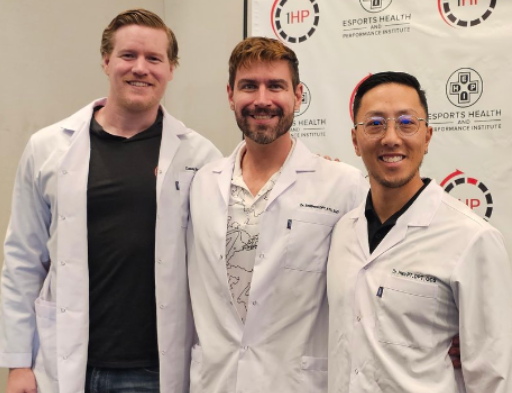
By Dr. Elliot Smithson, PT, DPT, MS, ATC, EMT·October 5, 2026

Dentist hand pain can affect the thumb, wrist, forearm, elbow, or several areas at once. For a clinician who relies on precise hand control, that can feel risky for a career. Dental work involves fine, repeated moves, tool handling, pinch or grip demands, and long holds. These demands may add to musculoskeletal symptoms. They do not prove one diagnosis or a single cause.
A useful starting point is the pattern. Where is the symptom? What task brings it on? Does it wake you at night? Does it change your grip, dexterity, or ability to finish a procedure? This guide keeps the source post’s practical goal: help dentists link symptoms with work demands. It also separates helpful observations from claims that need an individual clinical check.
Dentist Hand Pain Starts With the Work Pattern
Studies report musculoskeletal pain in many dental personnel. Estimates vary by role, body site, and method. The often-cited 64%–93% range refers to general musculoskeletal pain in dental staff. It does not describe hand pain alone, a confirmed diagnosis, or an injury caused only by dentistry.
Dentist hand pain may reflect a mix of fine repeated movement, tool use, forceful gripping, vibration, workload, posture, and few chances to change position. A tight schedule can make these demands add up. This still cannot tell you whether a symptom involves a tendon, a nerve, a joint, or another source.
Try a one-week clinic note. Record the body area, the task, the time of day, and what changes the symptom. A helpful note might read: “thumb-side wrist ache during scaling, better after task change,” or “little-finger tingling after phone use at night.” This is not a self-diagnosis tool. It gives you a clearer story to bring to a check.
The 1HP website has more resources for people whose work requires repeated hand use.
Use a short note, not a long log
For dentist hand pain, keep the note easy. If it takes too long, it will not last. At the end of a case, write four short facts. Write the task. Write the body spot. Write when it came on. Write what you did next. You do not need to rate each move. You do not need to guess the cause.
For example, write “right thumb side, first hour of scaling, ache rose with grip, changed hand and it eased.” Or write “left ring and little finger, after phone use, numb at night, no change yet.” A short note is more useful than a vague line that says “hand hurt all day.”
Look for a trend at the end of the week. Does one task show up more than the rest? Does a long block of the same case feel worse than a mixed list? Do signs start at work, after work, or at night? Does a change in seat height, light, tool reach, or elbow spot make a clear change?
This process does not prove that the task caused the pain. It does help you see what to ask next. It can also stop a common trap. A bad day may make every task feel like the cause. A week of short notes can show which part of the day has the most clear link.
If a symptom is steady, gets worse, or affects your grip, do not wait for a perfect log. The log is a tool. It is not a test you must pass before you ask for help. Use what you have, then share the pattern with a clinician.

Thumb-Side Wrist Pain in Dentists
Thumb-side or radial wrist pain is one reason people search for dentist hand pain. Pain and tenderness near the thumb side of the wrist, sometimes worse with thumb or wrist movement, grasping, lifting, or twisting, may fit De Quervain disease. Several other conditions can feel similar.
Dental scaling and other procedures use fine motor control and pinch force. Small ergonomic studies suggest that lighter, larger-diameter scaling tools can reduce measured pinch force. That is not proof that a particular tool, pinch grip, or dental procedure caused De Quervain disease in one person.
A clinician may use a Finkelstein-type maneuver as one part of a check. A painful self-test does not confirm a diagnosis. If De Quervain disease is diagnosed, care is individualized. A systematic review and network meta-analysis supports considering clinician-delivered corticosteroid injection with a short period of thumb-spica immobilization. It does not support a universal online loading plan for every thumb-side wrist symptom. Read the De Quervain evidence review.

Ring and Little-Finger Tingling May Follow an Ulnar Pattern
Tingling or numbness in the little finger and the little-finger side of the ring finger may point to ulnar-nerve involvement. Cubital tunnel syndrome is one possible cause. Symptoms may be more noticeable with a bent elbow, phone use, sleep, or pressure on the inside of the elbow.
This pattern does not show where a nerve is irritated. Symptoms can arise at the wrist, neck, brachial plexus, or another site. It is more accurate to call this an ulnar pattern than to label it cubital tunnel syndrome from symptoms alone.
During dental procedures, note positions that are clearly aggravating for you. Avoiding prolonged elbow bend or inner-elbow pressure that you know are provocative can be a reasonable work change. Night positioning or nerve glides may be part of clinician-guided conservative care. Research has not established one best splint, angle, duration, or glide dose. The AAOS guide to ulnar nerve entrapment explains common features and check options.

Tendon Pain and Nerve Symptoms Need Different Questions
The source post rightly emphasizes that work demand matters. It is also important not to put all dentist hand pain into one tendon model. Tendinopathy is a load-related tendon condition that may be relevant in some cases. Numbness, tingling, loss of dexterity, or weakness need a different question because they may involve a nerve.
The Cook–Purdam continuum is a useful tendon model for some load-related problems. It is not a self-treatment test, a way to stage every hand problem, or an explanation for nerve symptoms. A tendon can adapt to load. Evidence from Achilles or patellar tendon research does not simply transfer to the thumb, wrist, or nerve-related hand symptoms in dentists.
For several diagnosed tendinopathies, progressive, symptom-informed resistance exercise is a central part of conservative care. The details matter. Upper-limb evidence is stronger for lateral elbow and rotator cuff than for De Quervain disease and other thumb or wrist problems. A systematic review of hand and wrist exercise interventions found that specific dosing evidence is still limited.

Carpal Tunnel Symptoms Are Not a Self-Diagnosis
Carpal tunnel syndrome is compression of the median nerve at the wrist. Typical symptoms can include tingling, numbness, burning, or pain in the thumb, index finger, middle finger, and thumb-side half of the ring finger. This is why dentist hand pain deserves a full symptom history rather than a quick online label.
The carpal tunnel contains the median nerve and nine flexor tendons beneath the transverse carpal ligament. Pressure on the nerve may reflect a combination of tunnel anatomy, wrist position, and tissue swelling. It is not usually possible—or needed—to classify a case as only a “ligament problem” or only a “tendon problem.”
A clinician can often diagnose carpal tunnel syndrome from the history and exam using a validated clinical tool such as CTS-6. Ultrasound or electrodiagnostic testing may be useful in selected uncertain cases or when another neurologic problem is being considered. MRI should not be used routinely to diagnose carpal tunnel syndrome. The AAOS 2024 clinical practice guideline outlines these recommendations.


Compare Work Demand With Current Tolerance
Dentist hand pain can be easier to understand when you compare what your workday asks of you with what your body now tolerates. A full schedule may include sustained retraction, instrument control, crown preparation, scaling, surgical work, and patient positioning. Ergonomics, loupes, sharp tools, handle design, seating, and schedule design may reduce identified demands or aggravating positions. They are not proven cures for a named disorder.
The source post uses a health-bar analogy. It can help you notice demand without assuming damage. A day with back-to-back hand-heavy procedures may leave less room to change position or recover between tasks. A more useful question is not “what one piece of equipment fixes this?” but “what task, position, sequence, or workload reliably changes my symptoms?”
Reducing a task may be part of a plan. Building capacity may be part of a plan for a diagnosed tendon condition. Neither idea replaces a check for persistent numbness, weakness, or a changing pattern. The aim is to make your work exposure measurable and adjustable, not to blame yourself for a busy clinic.


What Exercise Can and Cannot Do for Dentist Hand Pain
It is natural to want one short routine for dentist hand pain. The original source includes exercise demonstrations for common hand and forearm moves. Keep the key limit in mind: a linked demo does not prove that the movement suits your symptom pattern, weight, range, tempo, frequency, or recovery stage.
Exercise may help when a check supports a load-related tendon plan. It is not a generic answer to constant numbness, tingling, weakness, loss of dexterity, unassessed thumb-side pain, or symptoms after trauma. Short-term activity changes, bracing, medication, injections, and exercise each have roles that depend on the diagnosis.
Mobility demonstrations from the source
The original source links to these 1HP exercise demonstrations. They are preserved here as resources, not a fixed prescription:

Wrist flexor stretch: arm extended, palm up, gently pull fingers back

Wrist extensor stretch: palm down, gently pull hand down and in

Thumb extensor stretch: thumb in fist, gentle ulnar deviation
Isometric demonstration resources from the source
Isometric exercise may be used in some rehabilitation plans. The source demonstrations below do not supply a universal hold time, intensity, or daily dose.

Wrist flexion isometric: forearm supported, palm up, resist with the other hand

Wrist extension isometric: same setup, palm down

Thumb extension isometric: sustained sub-maximal thumb extension
Paced resistance demonstrations from the source
A metronome is a cue for steady movement, not a cure. No setting, including 50 BPM, has been validated for dentists with hand symptoms, De Quervain disease, carpal tunnel syndrome, or cubital tunnel syndrome. Fixed online weights and repetition targets should not replace a check and a condition-specific plan.

Wrist flexion curls demonstration

Wrist extension curls demonstration

Radial deviation raises demonstration

Ulnar nerve glide demonstration
Externally paced training has a proposed motor-control rationale, but a systematic review found no reliable overall pain advantage over comparison care. Use a cue only if it fits a clinician-guided plan. Read the externally paced training review.
Workday Adjustments for Dentist Hand Pain
Dentist hand pain may be easier to manage when your workday gives you more chances to notice and adjust a pattern. This is not a promise that schedule or equipment changes prevent a specific disorder. It is a practical way to reduce a known aggravating demand while you assess the bigger picture.
- Before clinic: set your patient, stool, light, loupes, and instrument access so you are not reaching or holding one position longer than necessary.
- Between patients: change your elbow angle, hand position, or posture and note whether symptoms change. Do not force a painful stretch or nerve glide because a checklist says to do it.
- When scheduling: when feasible, avoid stacking the same hand-intensive procedure repeatedly if you know that sequence aggravates symptoms.
- With instruments: review sharpness, handle diameter, weight, and how much pinch force a task seems to need. These are ergonomic variables, not a diagnosis.
The NIOSH ergonomics overview explains how work design can address musculoskeletal demands.
Before the first patient
Start with the room, not the pain. Put the stool, light, tray, and tools where you can reach them with less effort. Check that you can see the field without leaning far in or holding the elbow in one hard spot. Small changes may not fix a symptom. They can still make the workday easier to read.
Pick one item to watch. It may be the height of the patient. It may be the way you hold a tool. It may be the reach to a tray. Keep the rest of the day the same if you can. Then note if the change made the task feel the same, less hard, or more hard.
A good setup is not one pose that you hold all day. It is a setup that lets you move. A chair, light, or tool spot that looks fine at the start may feel very different at the end of a long list. Make room for more than one hand and elbow spot.
During and between cases
Use the end of a case as a cue. Let the hands rest on your lap for a few breaths. Change your seat or elbow spot. Stand if that helps. Then ask one short question: did the last case change the symptom? This can help you tell a full-day ache from a task-linked sign.
You do not need to force a stretch, hold a weight, or do a nerve glide at each break. If a clinician has given you a plan, use that plan. If not, a brief change in pose and a clear note are enough. The goal is to see the pattern, not to turn every room change into a treatment.
If your list allows it, mix tasks. A change in case type can give the hand a new job. It can also show if one type of work is a key trigger. This is not a rule that all dentists must use. It is one way to test a workday pattern when the schedule gives you a choice.
At the end of the day
Take one minute before you leave. Was the symptom gone, the same, or worse? Did it move? Did it come with numbness, loss of grip, or a drop in fine hand use? Note any night signs from the day before. A clear change over time is often more useful than one hard shift.
Do not use a good day as proof that the issue is gone. Do not use one bad day as proof that harm is severe. Look for the trend. If the trend is not clear, a clinician can help sort the work story, health story, and exam findings.

When Dentist Hand Pain Needs an Assessment
Seek an appropriate clinical assessment for persistent or worsening pain; constant or progressive numbness or tingling; new weakness; declining fine-motor control or dexterity; dropping objects; or visible hand-muscle wasting. Prompt assessment matters after trauma and when neurologic symptoms are progressing.
For an ulnar pattern, persistent sensory loss, intrinsic-hand weakness, reduced dexterity, visible wasting, or ring-and-little-finger clawing should not be managed with a generic online routine. For a possible carpal tunnel pattern, persistent numbness, weakness, or thenar wasting also deserves timely care.
Symptoms do not automatically mean surgery or a career-ending problem. They do mean that online location charts, provocative tests, and generic exercise videos are not enough to decide the cause or the right next step.

Build a Plan for Your Dental Career
Dentist hand pain is not a character flaw or proof that you chose the wrong profession. A productive plan starts by identifying the symptom pattern, the work demand, and the point where you need clinical input. It may include ergonomic changes, temporary task modification, diagnosis-specific care, and—in the right context—an individualized progression plan.
If dentist hand pain is affecting your schedule, confidence, or ability to perform the procedures you value, book a free 60-minute consultation with 1HP. We can discuss your work demands, symptom history, and prior attempts so you can decide whether 1HP coaching fits your next step.
Questions to bring to a dentist hand pain check
Bring the facts that change the plan. Tell the clinician where the sign starts. Say which fingers feel numb, if any. Say if it wakes you at night. Say if you have weak grip, loss of fine control, or a hard time with a tool. These details can be more useful than a broad name for the pain.
Bring your clinic note if you have one. Explain what kind of cases you do, how long they last, and which blocks feel most hard. Mention past injury, neck signs, health changes, prior care, braces, or medicine. The goal is not to prove a theory from the web. The goal is to give the full story.
Ask what pattern the clinician sees. Ask what signs would mean you need more tests. Ask what work changes make sense while the plan is new. Ask how you will know if the plan is helping. These are clear questions. They can make a visit feel less vague.
A good plan should fit your job. It should not ask you to ignore a key sign or copy a fixed online routine. It should give you a way to adjust when a symptom changes. That is how a plan can support work now and help you make sound choices for the years ahead.

References
- Hayes MJ, Cockrell D, Smith DR. A systematic review of musculoskeletal disorders among dental professionals.
- A systematic review and meta-analysis of musculoskeletal disorders among dental professionals.
- Systematic review of instrument characteristics and pinch force in dental scaling.
- Management of De Quervain Tenosynovitis: Systematic Review and Network Meta-Analysis.
- American Academy of Orthopaedic Surgeons. Ulnar Nerve Entrapment at the Elbow.
- American Academy of Orthopaedic Surgeons. Management of Carpal Tunnel Syndrome Clinical Practice Guideline.
- Exercise interventions for hand and wrist tendinopathy: systematic review.
- Externally paced loading for tendinopathy: systematic review and meta-analysis.
Medical disclaimer: This article provides general education and does not diagnose, recommend, or replace individualized medical care. A qualified clinician can help determine the cause of hand, thumb, wrist, forearm, elbow, or nerve symptoms and discuss appropriate options. Seek prompt evaluation for severe or worsening pain, constant or progressive numbness or tingling, weakness, visible muscle loss, major swelling, fever, deformity, or symptoms after an injury.