
Cubital Tunnel From Gaming
Cubital Tunnel Syndrome
By Brett Becker, OTR/L, MS, ACE-CPT
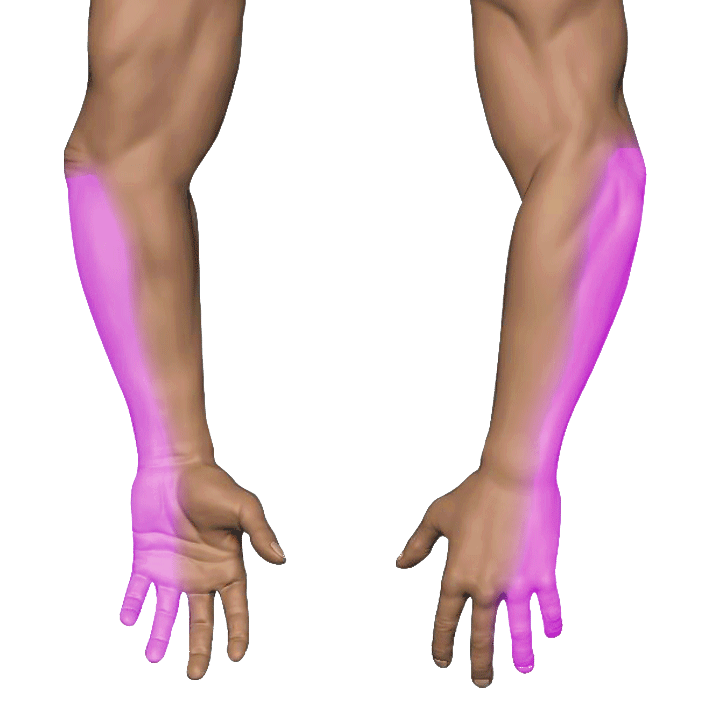
Table of Contents
Expert Opinion
- Cubital tunnel is one of the most common conditions of the upper extremity, but also one that gets overshadowed by carpal tunnel syndrome.
- Cubital Tunnel Syndrome is compression of the ulnar nerve which innervates (supplies) specific muscles in the hand and fingers.
- Nerves are responsible for providing muscles with necessary strength, coordination, sensation, and ultimately function which is hugely important in gaming.
What Does This Diagnosis Mean
Cubital Tunnel Syndrome is a condition that affects the ulnar nerve at your elbow. The ulnar nerve runs through the "cubital tunnel" (a narrow passageway on the inside of the elbow) which can become irritated and compressed through prolonged or excessive elbow flexion (bending). The ulnar nerve controls sensation and movement in the small finger and ulnar (pinky) side of the ring finger. The ulnar nerve is most recognized for those who hit their "funny bone" — this is not a bone at all but the ulnar nerve which is susceptible to trauma as the elbow bends and loses its protection.
"An analogy that can be used to think of nerves is like a water hose. When a water hose has a kink in the line there may be a little water sputtering out which can be like the tingling often first experienced with some prolonged bending at the elbow. With a large bend in the line this results in no water coming out, similar to when an individual sleeps with their elbow extremely bent and wakes up with a numb hand. Similarly, this can also occur with pressure being placed on the nerve or hose. If someone comes along and steps on the hose then water may stop or sputter out just as if external pressure from resting the elbow directly on the hard table/armrest. If there is no water coming from the hose to feed the plants then the plants will begin to die after months, similar to how our muscles can start to atrophy (die/weaken) if they are not getting proper innervation (supply) from the nerve."
Repetitive elbow bending and straightening can lead to irritation and inflammation at the cubital tunnel, compressing the ulnar nerve and resulting in numbness, tingling, and pain in the small finger and ulnar side of the ring finger. Posture and ergonomics are hugely important — resting on the elbow for prolonged periods compresses the nerve, as does sleeping in extreme elbow flexion. Anatomical variations may cause a subluxing ulnar nerve ("popping"/"snapping" at the medial epicondyle).
Common Things You Might Feel
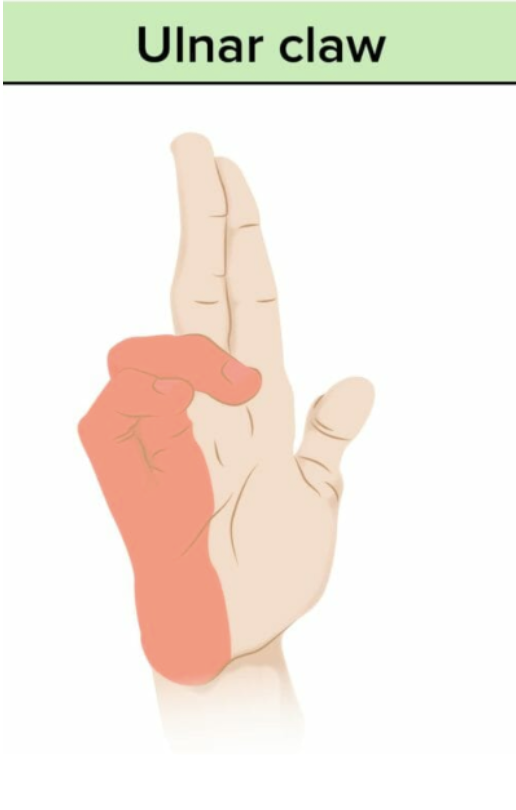
Gamers are likely to begin experiencing tingling or numbness in the ulnar nerve distribution. Gamers may report feeling "slow" or weakness gripping the mouse. Finger dexterity is likely reduced. This condition slows the functioning of the small and ring finger which PC gamers may use to hit the shift or control key. When pain is reported without numbness/tingling, suspicion should be placed on a tendon injury instead, as tendinopathies are much more common in gaming. In severe or untreated cases some may develop an "ulnar claw hand deformity."
Data suggest tendinopathies are far more prevalent than cubital tunnel syndrome (Hwu, 2021). When it occurs, it is brought on by sleep positioning, lack of rest breaks, overweight/obesity (Descatha et al., 2004), repetitive elbow flexion/extension, and anthropometric measures.
Disclaimer: The following information is provided for general educational purposes only and should not be considered medical advice. It is not intended to replace consultation with a qualified healthcare professional. If you have specific concerns or questions about your health or medical condition, please seek the guidance of a licensed physician or another qualified medical practitioner. Any reliance you place on the information provided is solely at your own risk. In no event will the author or 1HP be liable for any loss or damage arising from using this information. Always consult with a healthcare professional before starting or changing any medical treatment or regimen.
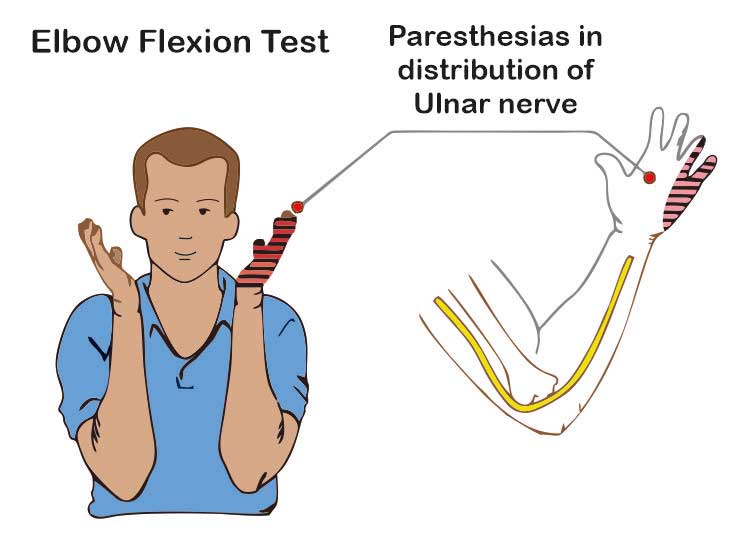
Quick Test
Perform this quick test to screen for this diagnosis. If there is numbness/tingling (paresthesia) in the highlighted area, this may indicate you have this condition.
Instructions: Position the elbows in maximal flexion and hold for 60 seconds.
How Does It Happen to Gamers?
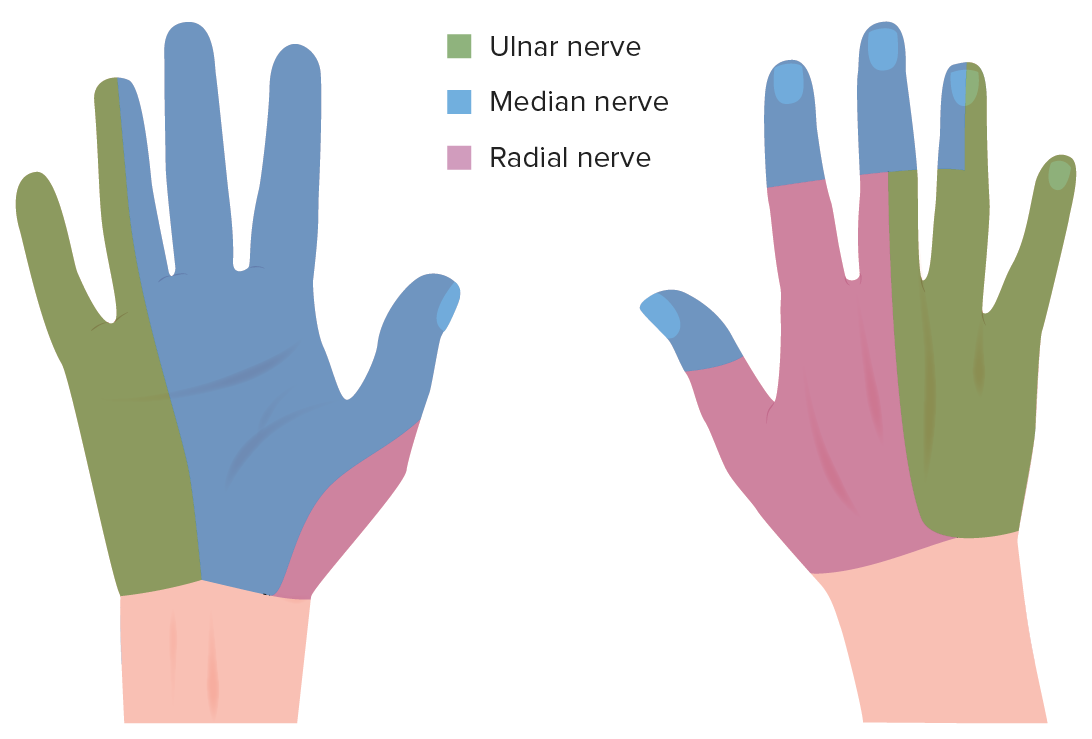
Numbness/tingling will be present but differs in location from carpal tunnel syndrome. Carpal tunnel is compression of the median nerve; cubital tunnel is compression of the ulnar nerve.
- Gamers who sit with poor posture may rest and lean on their elbows more, resulting in compression at the elbow.
- Gamers who sit for prolonged periods without moving, with the elbow bent.
- Gamers who sleep with their elbow bent are more likely to experience daytime symptoms of numbness/tingling.
How to Fix It / Recover / What Can You Do?
- Identify the issue (early detection…do NOT push into or through numbness/tingling discomfort).
- Night Splinting — An elbow extension brace worn on the inner part of the elbow to prevent excessive bending (a frequent complaint is waking with numbness/tingling). Use as minimally as possible.
- Elbow Padding — Wearing/adding an elbow pad where the elbows rest may be necessary depending on ergonomics.
- Massage — Prioritize the forearm as muscles can be tense and tight from overuse, increasing pressure on the nerve.
- Utilize heat/ice (hot/cold packs, warm water soak).
- Movement Breaks — Increase blood flow to surrounding nerves, muscles, and tendons.
- Nerve Glides — Restore mobility between the nerve and surrounding tissue.
- Stretching — Decrease tightness throughout the muscles of the arm, reducing pressure on the nerve.
Diagnosis specific tip: Pay attention to which fingers and when numbness/tingling occurs, as this gives indication to which activities may be provoking it (not always gaming alone).
Surgery is rarely required, but can be effective if indicated.
Science Behind The Injury
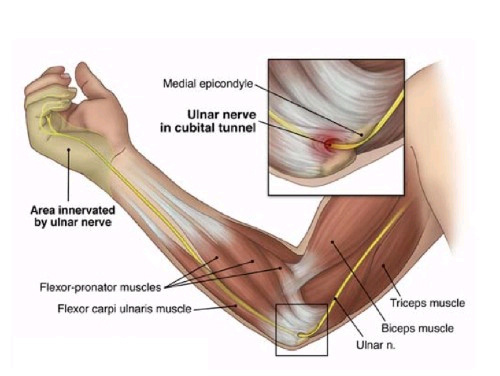
Specifically, this diagnosis is looking at the ulnar nerve and the surrounding tendons and muscles. The ulnar nerve is a mixed (sensory and motor) nerve which runs down from the brachial plexus, through the cubital tunnel (where compression occurs), and into the hand and fingers.
Nerve Responsible:
- Ulnar Nerve: Supplies the small finger and pinky (ulnar) side of the ring finger and hand, both front and back (volar and dorsal).
Muscles/Tendons responsible:
- Flexor Carpi Ulnaris (FCU): Located on the inner (ulnar) side of the forearm; flexes the wrist and bends it to the pinky side. Largely associated with compressing the nerve as it passes between the two muscle heads.
Other involved structures:
- Osborne's Ligament — Forms the roof of the cubital tunnel, providing a protective covering for the ulnar nerve.
- Arcade of Struthers — A fibrous band just above the inner elbow (a more rare anatomical structure), another potential compression spot.
Differential Diagnosis
- Guyon's Canal Syndrome — Compression of the ulnar nerve near the palm-side wrist in the hypothenar eminence.
- Medial Epicondylosis (Golfer's elbow, Fighting Game Forearm) — Pain and inflammation in the tendons on the inner (flexor/volar) side of the elbow at the medial epicondyle.
- Thoracic Outlet Syndrome — Compression near the brachial plexus between the clavicle and first rib; can confuse interpretation of arm/hand symptoms.
Preventative Approach
There are 3 main factors to first focus on, plus secondary factors.
- Exercising — Strengthening (foundational base for tendinopathy prevention), movement breaks, and nerve glides.
- Intermittent stretching (during and after gaming sessions).
- Proper warm-up — Promotes blood flow and lubricates stiff joints.
Additional: Ergonomics/positioning; sleep (avoid excessive elbow bending — an elbow extension splint may be indicated at night); rest breaks (every 45–60 minutes); massage; heat; mental health/nutrition.
References
- Andrews K, Rowland A, Pranjal A, Ebraheim N. Cubital tunnel syndrome: Anatomy, clinical presentation, and management. J Orthop. 2018 Aug 16;15(3):832-836.
- Cutts S. Cubital tunnel syndrome. Postgrad Med J. 2007 Jan;83(975):28-31.
- Descatha A, Leclerc A, Chastang JF, Roquelaure Y. Incidence of ulnar nerve entrapment at the elbow in repetitive work. Scand J Work Environ Health. 2004 Jun;30(3):234-40.
- Kooner S, Cinats D, Kwong C, Matthewson G, Dhaliwal G. Conservative treatment of cubital tunnel syndrome: A systematic review. Orthop Rev (Pavia). 2019 Jun 12;11(2):7955.
- Shah CM, Calfee RP, Gelberman RH, Goldfarb CA. Outcomes of rigid night splinting and activity modification in the treatment of cubital tunnel syndrome. J Hand Surg Am. 2013 Jun;38(6):1125-1130.e1.
- Wolny T et al. The Effects of Physiotherapy in the Treatment of Cubital Tunnel Syndrome: A Systematic Review. J Clin Med. 2022 Jul 21;11(14):4247.