
Table of Contents
"It's All In Your Head" - Why your doctor is both right AND completely missing the point
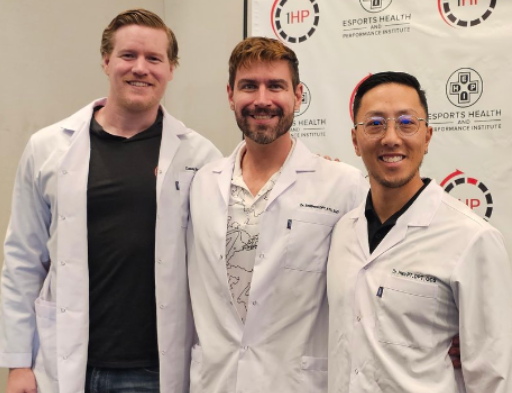
By Dr. Elliot Smithson, PT, DPT, MS, ATC, EMT·June 1, 2026

If you have been dealing with persistent wrist, hand, or arm pain for more than three months, you have likely visited multiple healthcare providers. Perhaps you underwent X-rays, ultrasounds, or even an MRI, only for the results to come back completely normal. In many cases, this frustrating journey culminates in a doctor looking at your clean scans and offering a dismissive explanation: "It's all in your head."
Hearing this can feel incredibly invalidating. It sounds as though your provider is suggesting that your physical suffering is imaginary, fabricated, or a simple manifestation of stress. However, from a neurological perspective, your doctor is actually correct—all pain is processed in the brain. But by delivering this truth as a dismissal rather than a diagnosis, they are completely missing the point. The pain you feel is not imaginary; it is a very real, physically measurable phenomenon known as neuroplastic pain. Understanding the difference between structural tissue damage and a hyperactive nervous system is the key to unlocking true recovery from chronic repetitive strain injuries (RSI).
Understanding the Neuroscience of Neuroplastic Pain
To understand why your doctor is both right and wrong, we must look at how the human nervous system processes threat signals. When you experience an acute injury—such as a sudden tendon strain—nociceptors in your wrist send warning signals up your spinal cord to your brain. Your brain processes these signals and generates the sensation of pain to protect you from further damage. This is the classic structural model of pain.
However, when pain persists for three to six months or longer, the nervous system undergoes structural and functional changes. This is known as neuroplasticity—the brain's ability to reorganize itself by forming new neural connections. In chronic RSI cases, the brain's pain processing centers become hyper-sensitized. It learns to produce pain even after the initial tissue irritation has resolved. This is the neuroplastic model of pain.
Research using functional Magnetic Resonance Imaging (fMRI) has demonstrated that individuals suffering from chronic pain exhibit completely different brain activity patterns compared to those with acute injuries [1]. In chronic states:
The brain's primary pain centers remain hyperactive even in the absence of ongoing tissue damage.
The amygdala—the brain's primary fear and threat-detection center—goes into overdrive, amplifying warning signals.
The spinal cord develops a phenomenon called "wind-up," essentially turning up the volume knob on all sensory input.
New neural pathways associated with emotion and memory light up during movement, linking physical activity with threat and fear.
This is not a psychological defect or "mind over matter" scenario. Neuroplastic pain represents actual, physical remodeling of your nervous system. Your nerves have become highly efficient at sending danger signals, and your brain has become hyper-reactive to receiving them.
The Structural vs. Neuroplastic Conflict
Many popular chronic pain theories, such as Dr. John Sarno's Tension Myositis Syndrome (TMS) model, suggest that chronic pain is entirely psychological and that structural tissue damage does not exist in these cases. At 1HP, we take a more balanced, evidence-based view. We believe that chronic RSI is almost always a combination of both structural and neuroplastic components.
In the early stages of a repetitive strain injury, your tendons, muscles, or nerves are genuinely irritated. Micro-tears in tendons or localized nerve compression are physical realities that require mechanical adaptation. However, as the months drag on, the neuroplastic component begins to dominate. If you only focus on "fixing your tendons" through passive therapies, rest, and ergonomics, you are missing half the puzzle. Conversely, if you only focus on psychological retraining without building physical tissue capacity, your hands will remain too weak to handle the physical demands of typing, gaming, or working.

Figure 1: The Dual Recovery Approach balances structural rehabilitation (building tissue capacity) with neuroplastic recovery (calming the nervous system).
The 7-Stage Pain-Fear Cycle
One of the most destructive forces in chronic RSI recovery is the Pain-Fear Cycle. Because we rely on our hands for our livelihoods, hobbies, and social connections, wrist pain triggers immense anxiety. This anxiety feeds directly back into the nervous system, creating a self-reinforcing loop that prevents healing.

Figure 2: The self-reinforcing loop of the Pain-Fear Cycle that traps chronic RSI patients.
Let's break down how this cycle operates in a typical chronic RSI scenario:
Pain Sensation: You feel a sharp or burning sensation in your wrist while typing or gaming.
Fear & Catastrophizing: Your mind immediately jumps to worst-case scenarios: "What if I can't work? What if this is permanent? What if I need surgery?"
Hyper-vigilance & Checking: You become hyper-focused on your hands. You constantly click, stretch, and press on your tendons to "check" if they still hurt, keeping your brain's alarm system on high alert.
Avoidance of Activity: To protect yourself, you stop typing, gaming, and doing chores. You opt for complete rest.
Tissue Weakening: Complete rest causes your muscles and tendons to decondition. In fact, muscles can lose 1% to 3% of their strength per day during prolonged immobilization. Your tissues are now weaker and less capable of handling load.
Re-entry & Pain Flare-up: After weeks of rest, you attempt to return to work. Because your tissues are now weaker, the mechanical load easily irritates them. You experience an immediate pain flare-up.
Confirmation of Fear: The flare-up "confirms" your worst fear: "I am permanently damaged. Resting didn't work. Nothing will." This massive spike in fear further sensitizes your brain, locking the neuroplastic pain pathways in place.
Scientific literature heavily supports this dynamic. Studies on fear-avoidance beliefs have shown that a patient's fear of pain is a significantly stronger predictor of long-term disability (correlation coefficient r = 0.7) than the actual extent of physical tissue damage (r = 0.3) [2]. Your brain's perception of danger is literally more disabling than the physical state of your tendons.
The Tactical Guide to Pain Reprocessing Therapy (PRT)
To break this cycle and retrain your hyper-sensitized nervous system, we utilize clinical techniques adapted from Alan Gordon's pioneering work on Pain Reprocessing Therapy (PRT), which was validated in a landmark randomized controlled trial published in JAMA Psychiatry [3]. The study found that 66% of chronic pain patients became pain-free or nearly pain-free after undergoing PRT, with benefits sustained over a long-term follow-up [4].
Here are the five core clinical techniques you can use to retrain your nervous system and overcome neuroplastic pain:
1. Somatic Tracking
Somatic tracking is the practice of observing the physical sensations in your body with an attitude of objective, non-judgmental curiosity. Instead of reacting to pain with panic, you learn to describe it as a neutral physical sensation, sending safety signals back to your brain.

Figure 3: Somatic tracking replaces emotional panic with objective, calm observation to quiet the brain's danger alarm.
Somatic tracking consists of four simple steps:
Locate the sensation: Identify exactly where the feeling is. Is it on the inside of your wrist, your forearm, or your palm?
Describe it neutrally: Instead of saying "I have a horrible, sharp pain," describe the physical characteristics: "I notice a warm, tight, tingling sensation about two inches below my thumb."
Rate the intensity: Give it a number from 0 to 10, but remind yourself that a 6/10 sensation is just a loud nerve signal, not a sign of structural destruction.
Inject safety messages: Explicitly tell yourself: "My tissues are structurally safe. This sensation is just my nervous system being overprotective. I am not in danger."
The Golden Rule: Do not watch your pain like a hawk watching its prey. That hyper-focus only increases the brain's alarm. Instead, observe it like a child watching a butterfly—with gentle curiosity, without trying to make it go away immediately. Practice this for 2 to 3 minutes, 3 to 5 times per day.
2. Outcome Independence
The paradox of chronic pain recovery is that the more desperately you chase being "pain-free," the more you reinforce to your brain that pain is a terrifying threat. Constantly checking your wrists, testing your range of motion, and anxiously monitoring your pain levels keeps your brain's alarm system permanently activated.
Outcome independence means shifting your focus away from immediate pain levels and toward functional progress. To practice this:
Perform your rehabilitation exercises without constantly checking if they hurt.
Measure your progress by what you can do (e.g., "I typed for 20 minutes today") rather than whether you felt zero discomfort.
Accept that recovery is non-linear. Having a high-pain day does not mean you have reset your progress to zero; it is simply a temporary fluctuation in nervous system sensitivity.
3. Fear Message Identification
Your thoughts are physical events in your brain that can directly trigger or suppress pain pathways. Catastrophic thoughts act as "Danger In Me" (DIM) signals that amplify pain. Identifying and challenging these automatic thoughts is critical.
Common fear messages in RSI include:
Automatic Fear Message (DIM) Evidence-Based Reappraisal (SIM) "If I type through this discomfort, I am tearing my tendons." "My tendons are actually getting stronger and adapting to appropriate mechanical load. Mild sensation during activity is normal." "My MRI is clean, so there must be a hidden disease doctors are missing." "A clean MRI is wonderful news. It confirms that my tissues are structurally intact, and my pain is primarily neuroplastic and treatable." "I will never be able to return to my career or gaming." "Thousands of people with severe chronic RSI have fully recovered using these exact principles. My nervous system is highly adaptable, and I can recover too."
For one week, keep a thought journal. Every time you experience a pain spike, write down what you were doing and, most importantly, what you were thinking. You will likely find that your pain is highly correlated with stressful, catastrophic thoughts rather than physical exertion.
4. Cognitive Reappraisal
Cognitive reappraisal is the process of consciously reframing the meaning of physical sensations. Your brain relies on context to interpret sensory inputs. In a classic neuroscientific experiment, researchers applied a cold metal rod to participants' skin. When paired with a red light, participants reported intense pain, believing they were being burned. When paired with a blue light, they reported a harmless cold sensation. The physical stimulus was identical; only the brain's interpretation changed.
You can apply this to your RSI. When you feel a burning or aching sensation in your forearms, consciously reframe it:
"This burning is not inflammation or damage. It is increased blood flow and metabolic activity as my reactive tendons adapt and rebuild. My body is doing exactly what it needs to do to get stronger."
5. Graded Exposure
The final step in breaking the Pain-Fear Cycle is graded exposure—systematically reintroducing feared activities in a controlled, progressive manner to build both physical tissue capacity and neurological confidence.
To implement a graded exposure protocol:
Create a Fear Hierarchy: List your daily activities from least feared to most feared (e.g., Level 1: scrolling on a phone for 5 minutes; Level 3: typing for 15 minutes; Level 6: gaming for 1 hour).
Establish a Baseline: Begin with an activity at or slightly below your current comfortable limit. Ensure you can perform it with minimal discomfort.
Progress Systematically: Increase your activity duration or intensity by 10% to 15% each week. If you can type for 20 minutes comfortably this week, aim for 22 to 23 minutes next week.
Manage Flare-ups with PRT: When you experience a temporary increase in sensation, do not panic. Use somatic tracking and cognitive reappraisal to calm your nervous system. Understand that temporary discomfort is a normal part of expanding your physical boundaries.
Building a Comprehensive Recovery Plan
Overcoming chronic RSI is never an "either/or" proposition. True, lasting recovery requires a comprehensive approach that addresses both the physical tissues and the nervous system. You must perform targeted, progressive loading exercises—such as isometric and eccentric tendon strengthening—to build structural tissue capacity. At the same time, you must practice Pain Reprocessing Therapy to lower your brain's threat-detection threshold and quiet the chronic pain alarm.
Recovery is not a straight line. You will experience setbacks, flare-ups, and frustrating days. However, when you understand that these setbacks are merely temporary spikes in nervous system sensitivity rather than structural damage, you can navigate them with calm confidence. Your nervous system is incredibly plastic and capable of healing. By combining physical rehabilitation with neuroplastic retraining, you can break the Pain-Fear Cycle and reclaim your life.
Ready to Fix the Root Cause?
If wrist, hand, or arm pain is holding you back from working, gaming, or living your life, you do not have to navigate this journey alone. Book a free 60-minute consultation with our clinical team at 1HP. We will review your pain history, analyze your movement patterns, and help you determine whether our comprehensive coaching program is the right fit to get you back to full, pain-free activity.
Medical Disclaimer: The information provided in this article is for educational and informational purposes only and is not intended as medical advice. Repetitive strain injuries and chronic pain are complex conditions that require individual assessment. Always consult with a qualified healthcare professional, physical therapist, or physician before starting any new exercise program, rehabilitation protocol, or pain management therapy.
References
Jaffal, S. M. (2025). Neuroplasticity in chronic pain: insights into diagnosis and treatment. The Korean Journal of Pain, 38(1), 46-58. PMC11965994
Zale, E. L., & Ditre, J. W. (2015). Pain-Related Fear, Disability, and the Fear-Avoidance Model. Pain Medicine, 16(3), 438–440. PMC4383173
Ashar, Y. K., Gordon, A., Schubiner, H., et al. (2021). Effect of Pain Reprocessing Therapy vs Placebo and Usual Care for Patients With Chronic Back Pain: A Randomized Clinical Trial. JAMA Psychiatry, 78(12), 1329–1340. JAMA Study Link
Ashar, Y. K., et al. (2025). Pain Reprocessing Therapy vs Placebo and Usual Care for Patients With Chronic Back Pain: 5-Year Follow-Up of a Randomized Clinical Trial. JAMA Psychiatry, 82(7), 2837160. JAMA 5-Year Follow-Up Link