
Table of Contents
The Multidisciplinary Esports Medicine Team
By 1HP Staff·February 16, 2025
Esports Medicine Roles and Responsibilities

The Athlete and the Coach
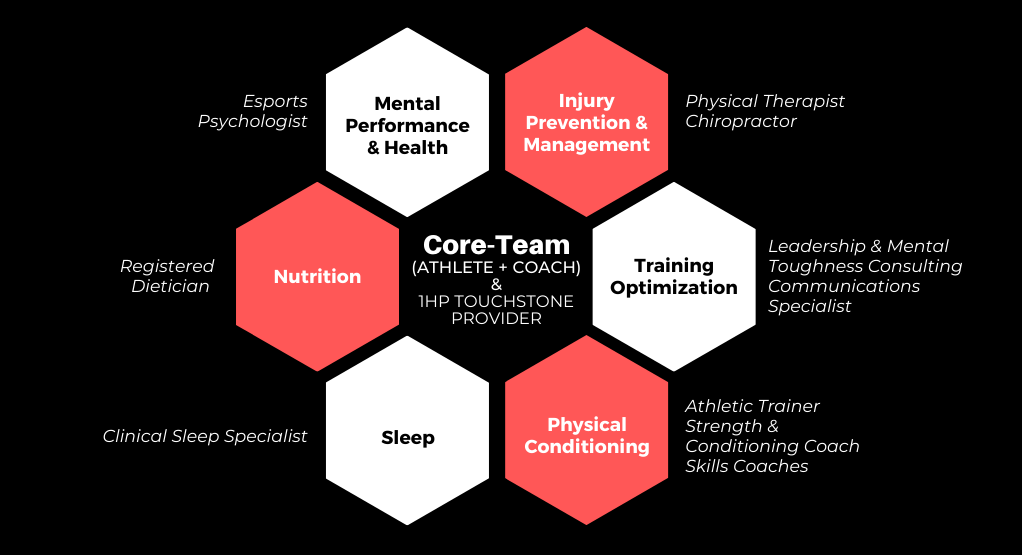
The athlete’s primary responsibility is to communicate any pain, discomfort, or symptoms to their coach and health team. When treatment or management strategies are recommended, adherence is crucial. The coach, being the person closest to the athlete, plays a vital role in recognizing signs of injury and ensuring that medical advice is followed.
The Touchstone Provider
A key component of an effective esports health team is the touchstone provider, who acts as the primary liaison between the athlete and the rest of the medical staff. This role is typically filled by a physical therapist or an athletic trainer, similar to an ATC (Certified Athletic Trainer) in traditional athletics. The touchstone provider ensures continuity of care, coordinates treatment plans, and facilitates communication between specialists. By having a dedicated provider in this role, esports athletes can receive streamlined and effective medical attention, reducing the risk of miscommunication and improving overall health outcomes.
Medical Doctors & Physicians
Doctors take a holistic approach, covering multiple body systems, including musculoskeletal, gastrointestinal, and respiratory health. Their expertise allows them to coordinate care and refer athletes to specialists when necessary.
Physical Therapists, Chiropractors, and Occupational Therapists
These professionals focus on acute and chronic injury management. They assess the root causes of issues, provide short-term symptom relief, and help athletes return to play safely. Occupational therapists often specialize in ergonomics, making them valuable for addressing workstation setup and prolonged gaming posture concerns.
Athletic Trainers & Strength Coaches
These professionals handle physical conditioning, injury prevention, and rehabilitation. They conduct physical assessments and prescribe exercises to improve strength, endurance, flexibility, and body composition.
Mental Health Professionals & Sleep Specialists
Psychologists and psychiatrists not only address anxiety and stress but also optimize sleep quality. Cognitive behavioral therapy (CBT) and other non-pharmacological interventions can significantly improve an athlete’s mental well-being and performance.
Optometrists & Vision Health Experts
Esports players spend extended hours staring at screens, leading to eye strain and visual fatigue. Vision specialists help manage these issues and optimize visual performance for different gaming genres.
Dietitians & Nutritionists
Many esports players, particularly younger ones, have poor dietary habits that impact their energy levels and concentration. A dietitian can create structured meal plans to optimize performance, focus, and recovery.
Challenges in Building a Comprehensive Health Team
While the ideal scenario is having a multidisciplinary health team, financial constraints can make this difficult. Not all esports organizations have the budget to hire multiple specialists. In such cases, health professionals may need to collaborate and share knowledge while staying within their scope of practice.
Conclusion
Esports athletes deserve the same level of care as traditional athletes. By integrating health professionals across various disciplines, we can ensure that players stay injury-free, perform at their best, and sustain long careers in gaming. Whether you're a coach, player, or health professional, understanding these roles can help create a healthier esports environment for everyone.